Beyond Growth - Volume 4: How Kay Williams grew Kreme Beauty

Kay Williams has never waited for permission.

She learned early that if something was going to happen, it would be because she made it happen. That instinct never left her. Not through a corporate career in pharmaceutical skincare, not through the years of running a salon on the side, and certainly not through the decade it took to build Kreme Beauty Lounge into an eleven-location affordable luxury brand.

From her first salon in 2018, funded with the help of Yoco Capital, to the moment she walked away from her corporate safety net for good, Kay's story is one of compounding bets on herself.

We sat down with Kay to learn how she built it, what closing locations taught her about opening better ones, and why she is now turning her attention to franchising and giving others their own piece of Kreme.
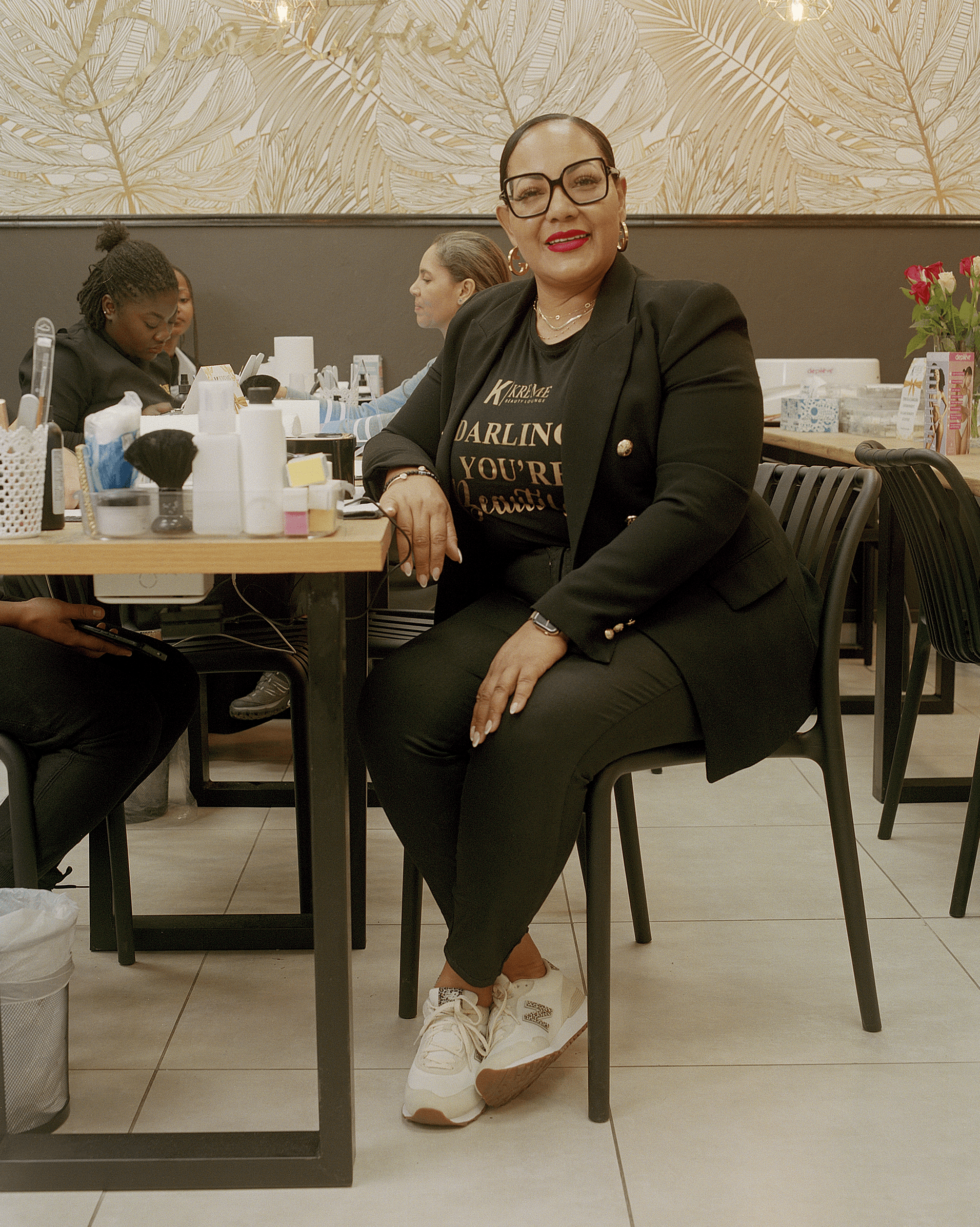
Founder and CEO of Kreme Beauty Lounge, Kay Williams grew up in Stellenbosch, one of four siblings, and from an early age learnt that if she was going to get the nice things she eyed, she’d have to buy them herself. Aged 15, she found a job cleaning rooms at premier health and wellness retreat, The Hydro, and on weekends and school holidays, she’d be up at dawn to catch the bus arranged to collect all the housekeeping employees. Paid weekly, bit by bit she’d excitedly pay off lay-byes at clothing stores on things that were all hers. “That sacrifice and working hard from a very young age basically never left me,” she says. As an adult working a full-time corporate job in Johannesburg at a pharmaceutical skincare company, she became the client at spas, having beauty treatments done. But that very early independence was still within her, and she couldn’t quite shrug off an idea that was starting to form to open her own beauty salon. Whenever she’d get her nails done at her regular spot, she’d flip through the pamphlets of franchise information at the counter and start plotting for ‘one day’. 

Kay’s job at the time was a fulfilling place to be and she considered her boss to be a mentor who pointed out she’d probably need at least two franchises to make up her current income. So instead of buying a franchise, in 2018, she took matters into her own hands, and opened her first Kreme Beauty Lounge with the assistance of Yoco Capital. Even as one location became five, Kay remained at her corporate job only leaving to become a full-time entrepreneur in 2023, around the time of store number six. “I always made sure while I was working that I never neglected my job but my business was now growing to the extent that it was becoming unfair to both,” she says of the time. Her boss, who had always been supportive of her dream, sat her down to tell her it was time to make a choice, saying, “Whichever one you choose, you're going to grow." “If it was the pharmaceutical portfolio, or if it was the side hustle, both were at a point where I needed to escalate to the next level,” Kay remembers. “I always had big dreams and big aspirations for myself, and I always wanted to achieve a lot. I think I'm just one of those people, like the advert, who is a big, big dreamer.” 
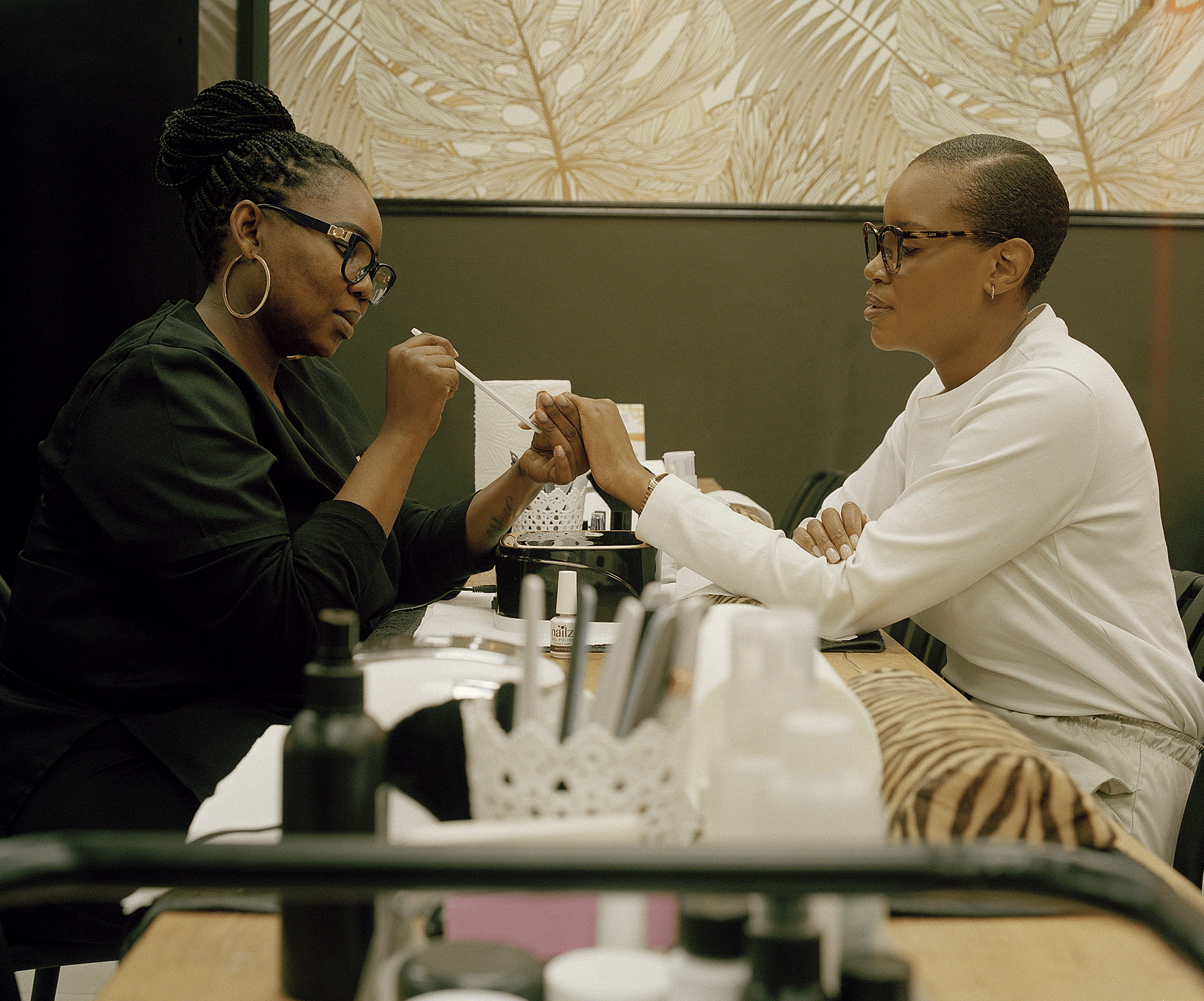
Eventually taking the leap was thrilling: “It was exciting and scary at the same time because my full-time job was always my safety net and my corporate family was really like a family,” Kay says. She remembers the realisation sinking in that now she was on her own. When people fall for the glamorous perception of independence, she reminds them that it can also be a difficult and often-times lonely road, which she describes as a journey between a founder and their faith. But going it alone has fast-tracked her personal growth, and she’s enjoyed how agile and quick she can be to make decisions without having to wade through layers of corporate protocols. “I was forced to be a lot more assertive, and I'm a lot more decisive,” she says. “I'm a lot more structured in my thinking, and also very strategic with execution. And my sense of intuition has grown tremendously.” Kay relies on these instincts to make decisions big and small in her business. She opened a location in Somerset West after visiting the area over an Easter holiday, and calling around to make a nail appointment for herself, found that everywhere was fully booked. Instead of getting frustrated, it got her thinking about how many other potential paying customers would also be turned away. 

Around the time that Kay opened her first store, she began noticing discarded ten cent coins everywhere she walked, and as a Christian, one day she had a revelation that God would provide her with ten stores. She started picking up the ten cent pieces she found, keeping them in pot plants, and still encourages her employees to pick up any ten cent coins they see to put into the soil of the plants in her salons. Near the end of 2025 she opened what she calls ‘baby number 10’. Now, whenever she sees a ten cent coin, she considers it a sign that she’s on the right path, and a reminder, she says, “that whatever I’m building, I’m actually just a vessel for these 10 shops.” 

When Kay had to make the difficult decision to close two of her locations, other opportunities replaced them. One of her first salons in a mall in Johannesburg, open since 2019, recently became a burden on her business when two new shopping centres opened in the area, and the mall struggled to keep up with them. Like much of the city, they faced water and electricity outages and didn’t install back-up power, an unfortunate overhead cost when operating in South Africa. “Closing a store is not a decision that you make lightly,” Kay says. “I will never recommend giving up too quickly but if you have enough validation with the numbers that it doesn't make financial sense anymore, you can make an informed decision. If it doesn’t work, it doesn’t work. You cut your losses, then find a new location and go somewhere else.” 
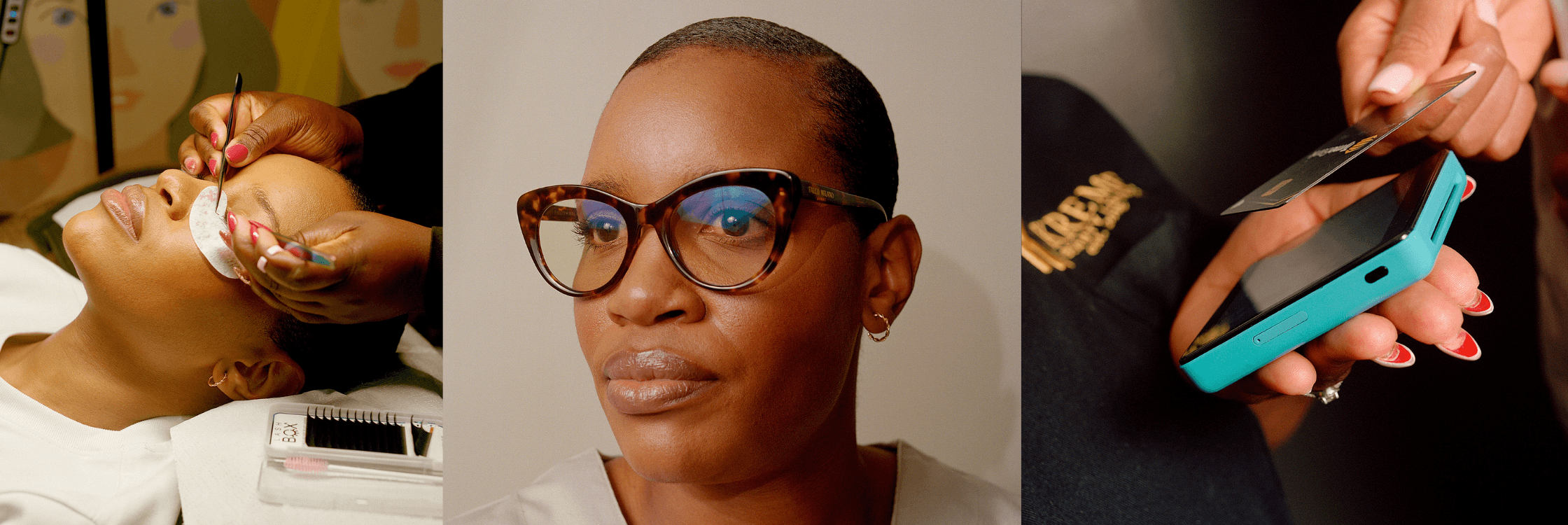
Every loss is a learning, and Kay has become wise about choosing locations. Her formula is to request census information on the area so she can assess the demographics and whether it’s an active micro economy. “I like seeing that data, and it just kind of reassures me that I'm choosing the right location,” she says. She’s also learnt to be pedantic about who the anchor tenant in the shopping centre is, favouring upmarket supermarkets and pharmacy brands. “The success of our business is a byproduct of who the anchor tenants are.” Signing a lease without this information has been a lesson with a high price tag. Lastly, she’s noticed that a centre with a gym is usually a good bet as it’s frequented by people with disposable income who are conscious of general health and wellness, and like to look good.    

Kreme has grown alongside an increasing adoption of self-care practices that’s become a worldwide trend, and evolved into a booming wellness industry. “I do believe in South Africa, it takes us longer to catch onto what the rest of the world is doing, but we are now at a point where everybody is so aware of self-care: taking care of their skin, taking care of their nails, taking care of their feet, being relatively fit, eating well, drinking water,” Kay says. She believes self-care is a top priority for most women today, with beauty treatments a large part of that, and earning their own money means they can spend it accordingly. “I think there is a lot of self-fulfillment when it comes to beauty treatments and taking care of yourself,” she says. 
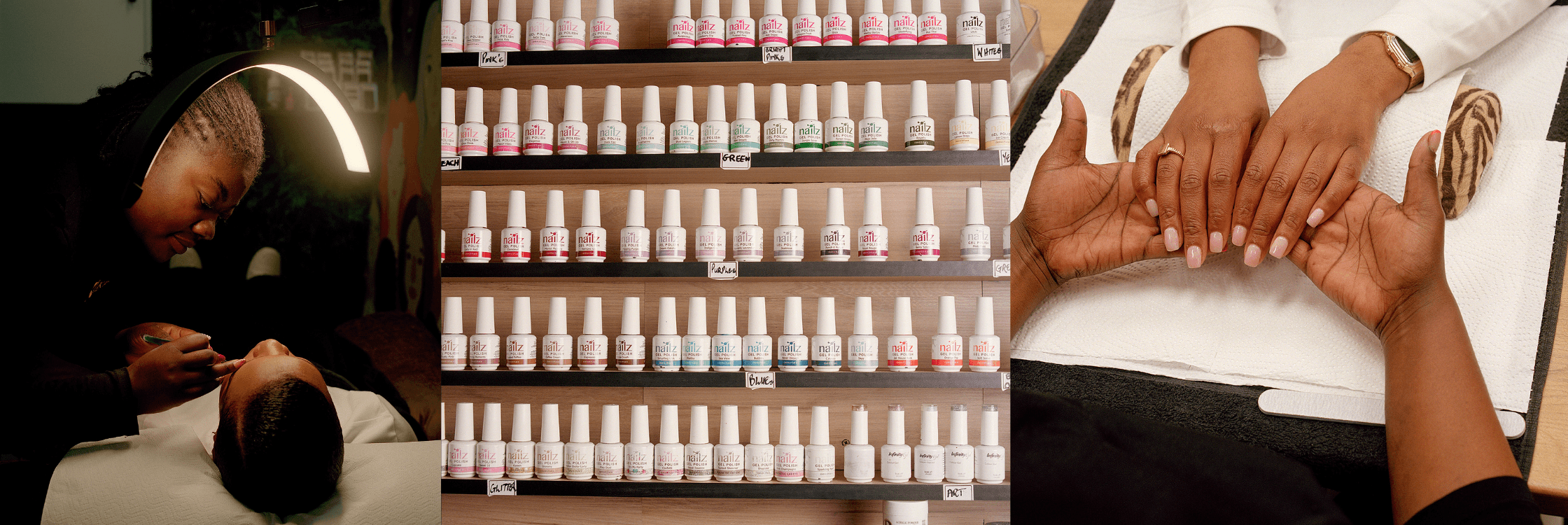
Kreme Beauty Lounge is positioned as an affordable luxury, where clients leave feeling good about themselves, ready to share the best version of themselves with others, extending the care from self outwards. In fact, the client Kreme bases their model on is the working mother. They don’t position themselves in the R800 beauty treatment bracket like some of their competitors. “From a pricing perspective, we make our prices attractive to the mom who’s then still able to do whatever she needs to,” Kay says, “She can buy groceries, and there's still R 200 left for nails. She can make that part of her budget.”  

A skincare regime, and making time to pamper oneself is a value instilled in Kay’s extended family through her maternal grandmother. “There was not one morning or one evening when I was at her house, that I did not see her use her skincare products,” Kay remembers. Her mother was the only girl in the family among five brothers, whose wives never miss a chance to tease them about their family habit of picking lavender for a bath at the end of a stressful day. One of her aunts often jokes with Kay saying, "The way you and your uncle finish a pot of moisturizing lotion in one go is unbelievable." 

For some reason, when opening store number 9, Kay stood at the doors to the salon and felt the sense of achievement she thought would only come with store 10. “I looked at it with admiration and I said to myself, "I'm glad I did this. I'm proud of myself." It was a moment when, no matter how many lavender baths it took to get there, she felt like the risks she took were worth it. Now she’s at a point where she’s looking at her ten stores like precious ornaments she’s collected and displayed on a shelf. But while she’s out acquiring more, the shelf needs dusting. “Even though the core of the business is to take care of others, we cannot take care of others if our cup is empty,” she says. She’s taking a moment to polish what she’s built before taking another step forward, this time with an even bigger footprint through opening Kreme Beauty Lounge for franchising. She wants to empower people to own their own piece of Kreme and realise their salon dreams like she did. 

For Kay, the relationship with Yoco has been there from the beginning.

“Yoco has been part of my business. Yoco has been part of my growth. Yoco is family to me, to be honest with you.”

— Kay Williams, Founder & CEO, Kreme Beauty Lounge
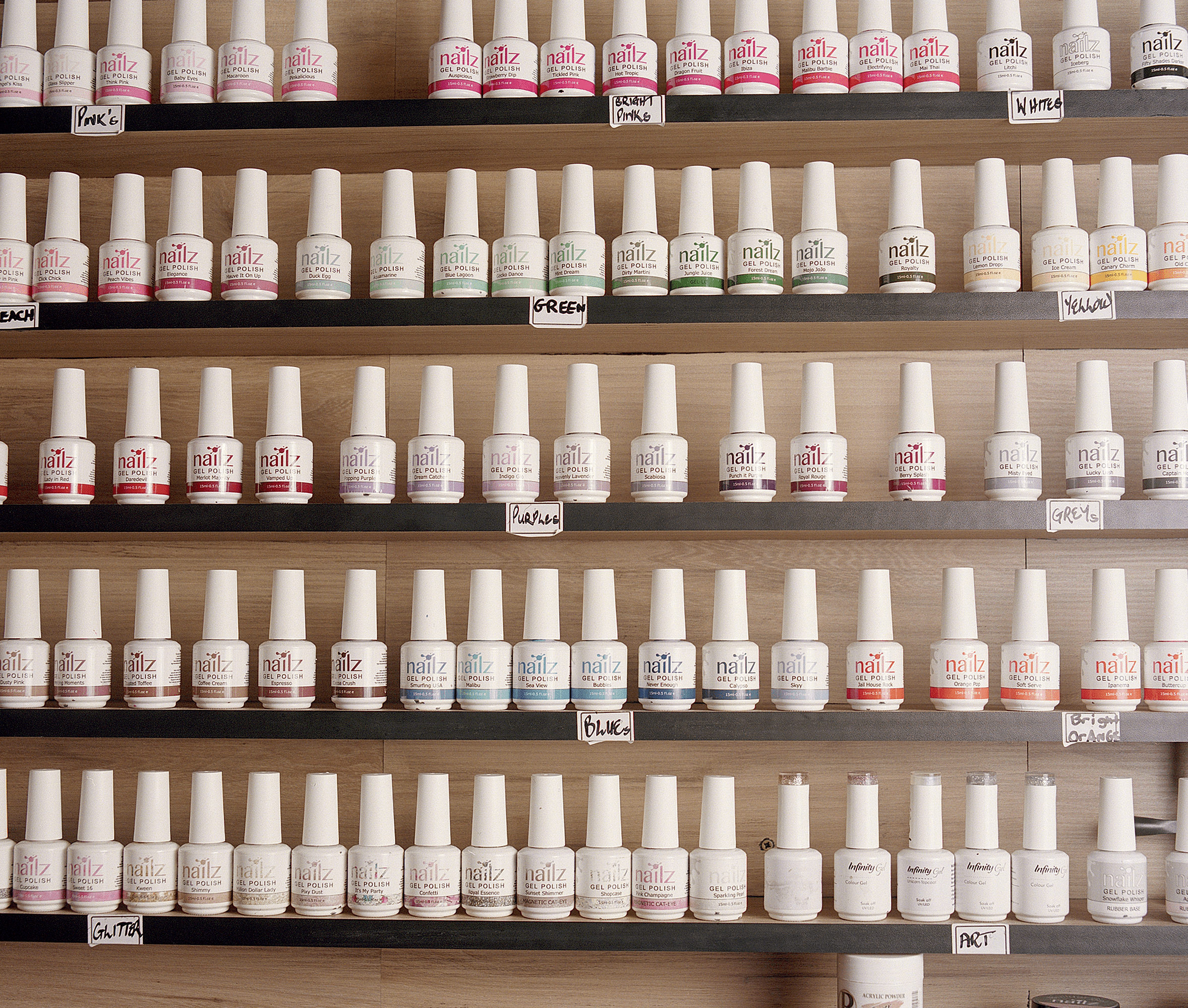
The challenge: running eleven salons without the tools slowing you down

Scaling a multi-location beauty business is a different operational challenge from running a single salon. With eleven locations across Gauteng and the Western Cape, each taking hundreds of transactions a week, Kay needed payment infrastructure that was mobile, easy for staff to use, and reliable enough that she never had to think about it.

The Yoco Neo Touch gave her that foundation. Card payments now account for 98% of transactions across Kreme’s salons. The devices are in every location, managed centrally, and simple enough that training new staff takes no time at all.

“The convenience of having a point of sale that is basically mobile accessible, easy to use for my staff, that’s what Yoco has given me.”

— Kay Williams, Founder & CEO, Kreme Beauty Lounge

Capital that opened doors, literally

Of everything Yoco has provided Kreme Beauty Lounge, the most tangible impact has come from Yoco Capital. Kay used it to open her first salon in 2018, and has since used the facility to fund ten of her eleven locations. 

Each time she qualified for capital, she took the decision seriously, weighing it against where the business was and what the next location would need.

“I took a leap of faith with Yoco Capital — opening one store, then another store, then another store. That facility has definitely assisted in helping my business grow.”

— Kay Williams, Founder & CEO, Kreme Beauty Lounge

Beyond the products, the relationship with her account manager, Bianca, has been a consistent thread through the business’s growth ensuring devices are organised and issues resolved reliably.  All just a phone call away.

“I feel that we are totally in a partnership with Yoco. I’ve never had issues with payouts or anything like that. I just love Yoco.”

— Kay Williams, Founder & CEO, Kreme Beauty Lounge
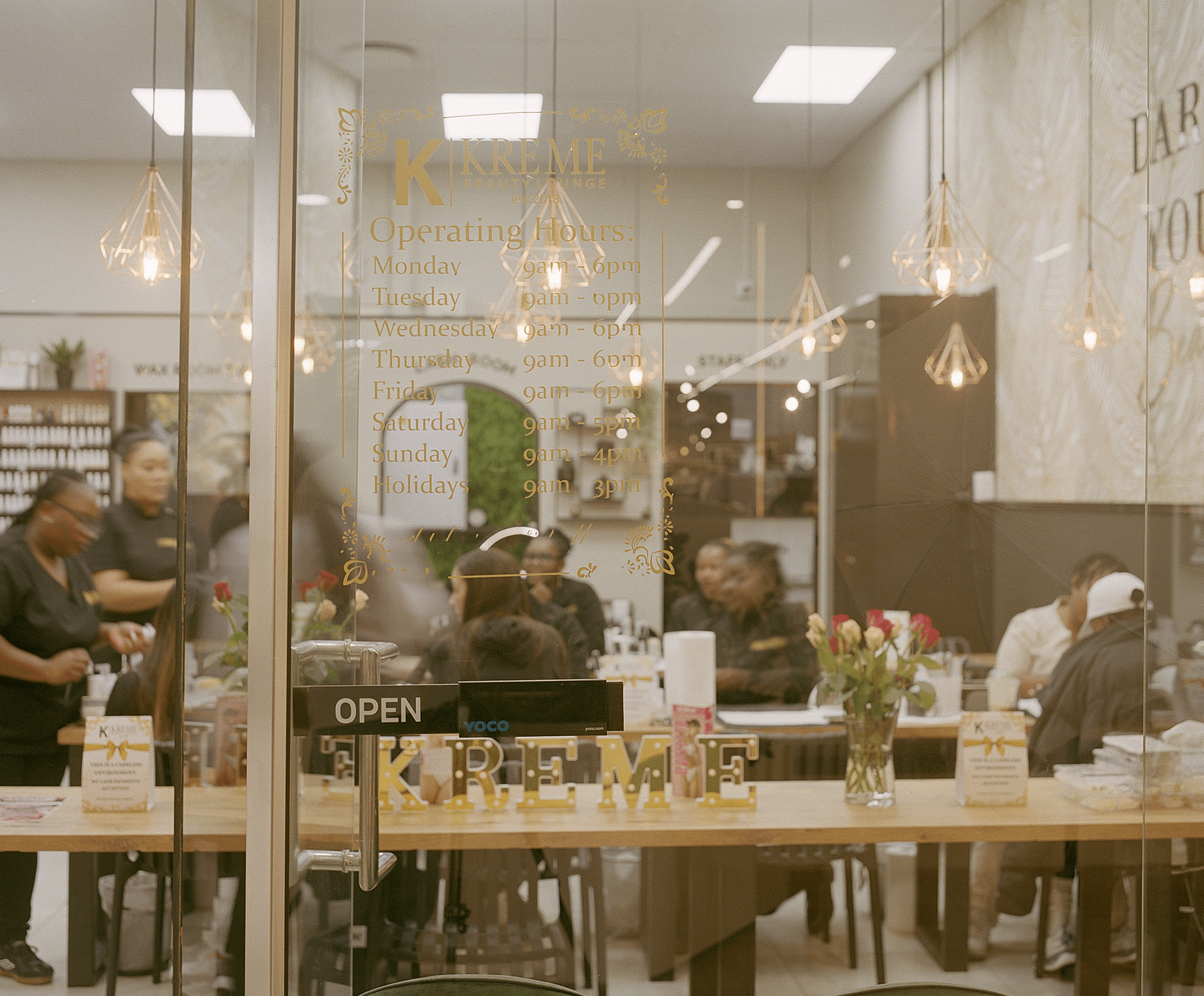
This isn’t just one story. Across South Africa, independent businesses are scaling on their own terms, a lot like Kreme Beauty Lounge.

In our accompanying data analysis, we zoom out to see the bigger picture, using Yoco transaction data to explore the broader patterns behind how independent businesses are growing today.

Because beyond the numbers, it’s stories like Kay’s that show what growth really means.

Let’s grow.
Recent

03 Jun 2026
Beyond Growth - Volume 4: How Kay Williams grew Kreme Beauty
28 May 2026
Why Dyner is joining Yoco
12 May 2026
Yoco Brings Tap to Pay on iPhone to South Africa

18 feb 2024

Category

Beyond Growth - Volume 4: How Kay Williams grew Kreme Beauty

Beyond Growth - Volume 4: How Kay Williams grew Kreme Beauty

Kay Williams has never waited for permission.

She learned early that if something was going to happen, it would be because she made it happen. That instinct never left her. Not through a corporate career in pharmaceutical skincare, not through the years of running a salon on the side, and certainly not through the decade it took to build Kreme Beauty Lounge into an eleven-location affordable luxury brand.

From her first salon in 2018, funded with the help of Yoco Capital, to the moment she walked away from her corporate safety net for good, Kay's story is one of compounding bets on herself.

We sat down with Kay to learn how she built it, what closing locations taught her about opening better ones, and why she is now turning her attention to franchising and giving others their own piece of Kreme.

Founder and CEO of Kreme Beauty Lounge, Kay Williams grew up in Stellenbosch, one of four siblings, and from an early age learnt that if she was going to get the nice things she eyed, she’d have to buy them herself. Aged 15, she found a job cleaning rooms at premier health and wellness retreat, The Hydro, and on weekends and school holidays, she’d be up at dawn to catch the bus arranged to collect all the housekeeping employees. Paid weekly, bit by bit she’d excitedly pay off lay-byes at clothing stores on things that were all hers. “That sacrifice and working hard from a very young age basically never left me,” she says. As an adult working a full-time corporate job in Johannesburg at a pharmaceutical skincare company, she became the client at spas, having beauty treatments done. But that very early independence was still within her, and she couldn’t quite shrug off an idea that was starting to form to open her own beauty salon. Whenever she’d get her nails done at her regular spot, she’d flip through the pamphlets of franchise information at the counter and start plotting for ‘one day’. 

Kay’s job at the time was a fulfilling place to be and she considered her boss to be a mentor who pointed out she’d probably need at least two franchises to make up her current income. So instead of buying a franchise, in 2018, she took matters into her own hands, and opened her first Kreme Beauty Lounge with the assistance of Yoco Capital. Even as one location became five, Kay remained at her corporate job only leaving to become a full-time entrepreneur in 2023, around the time of store number six. “I always made sure while I was working that I never neglected my job but my business was now growing to the extent that it was becoming unfair to both,” she says of the time. Her boss, who had always been supportive of her dream, sat her down to tell her it was time to make a choice, saying, “Whichever one you choose, you're going to grow." “If it was the pharmaceutical portfolio, or if it was the side hustle, both were at a point where I needed to escalate to the next level,” Kay remembers. “I always had big dreams and big aspirations for myself, and I always wanted to achieve a lot. I think I'm just one of those people, like the advert, who is a big, big dreamer.” 

Eventually taking the leap was thrilling: “It was exciting and scary at the same time because my full-time job was always my safety net and my corporate family was really like a family,” Kay says. She remembers the realisation sinking in that now she was on her own. When people fall for the glamorous perception of independence, she reminds them that it can also be a difficult and often-times lonely road, which she describes as a journey between a founder and their faith. But going it alone has fast-tracked her personal growth, and she’s enjoyed how agile and quick she can be to make decisions without having to wade through layers of corporate protocols. “I was forced to be a lot more assertive, and I'm a lot more decisive,” she says. “I'm a lot more structured in my thinking, and also very strategic with execution. And my sense of intuition has grown tremendously.” Kay relies on these instincts to make decisions big and small in her business. She opened a location in Somerset West after visiting the area over an Easter holiday, and calling around to make a nail appointment for herself, found that everywhere was fully booked. Instead of getting frustrated, it got her thinking about how many other potential paying customers would also be turned away. 

Around the time that Kay opened her first store, she began noticing discarded ten cent coins everywhere she walked, and as a Christian, one day she had a revelation that God would provide her with ten stores. She started picking up the ten cent pieces she found, keeping them in pot plants, and still encourages her employees to pick up any ten cent coins they see to put into the soil of the plants in her salons. Near the end of 2025 she opened what she calls ‘baby number 10’. Now, whenever she sees a ten cent coin, she considers it a sign that she’s on the right path, and a reminder, she says, “that whatever I’m building, I’m actually just a vessel for these 10 shops.” 

When Kay had to make the difficult decision to close two of her locations, other opportunities replaced them. One of her first salons in a mall in Johannesburg, open since 2019, recently became a burden on her business when two new shopping centres opened in the area, and the mall struggled to keep up with them. Like much of the city, they faced water and electricity outages and didn’t install back-up power, an unfortunate overhead cost when operating in South Africa. “Closing a store is not a decision that you make lightly,” Kay says. “I will never recommend giving up too quickly but if you have enough validation with the numbers that it doesn't make financial sense anymore, you can make an informed decision. If it doesn’t work, it doesn’t work. You cut your losses, then find a new location and go somewhere else.” 

Every loss is a learning, and Kay has become wise about choosing locations. Her formula is to request census information on the area so she can assess the demographics and whether it’s an active micro economy. “I like seeing that data, and it just kind of reassures me that I'm choosing the right location,” she says. She’s also learnt to be pedantic about who the anchor tenant in the shopping centre is, favouring upmarket supermarkets and pharmacy brands. “The success of our business is a byproduct of who the anchor tenants are.” Signing a lease without this information has been a lesson with a high price tag. Lastly, she’s noticed that a centre with a gym is usually a good bet as it’s frequented by people with disposable income who are conscious of general health and wellness, and like to look good.    

Kreme has grown alongside an increasing adoption of self-care practices that’s become a worldwide trend, and evolved into a booming wellness industry. “I do believe in South Africa, it takes us longer to catch onto what the rest of the world is doing, but we are now at a point where everybody is so aware of self-care: taking care of their skin, taking care of their nails, taking care of their feet, being relatively fit, eating well, drinking water,” Kay says. She believes self-care is a top priority for most women today, with beauty treatments a large part of that, and earning their own money means they can spend it accordingly. “I think there is a lot of self-fulfillment when it comes to beauty treatments and taking care of yourself,” she says. 

Kreme Beauty Lounge is positioned as an affordable luxury, where clients leave feeling good about themselves, ready to share the best version of themselves with others, extending the care from self outwards. In fact, the client Kreme bases their model on is the working mother. They don’t position themselves in the R800 beauty treatment bracket like some of their competitors. “From a pricing perspective, we make our prices attractive to the mom who’s then still able to do whatever she needs to,” Kay says, “She can buy groceries, and there's still R 200 left for nails. She can make that part of her budget.”  

A skincare regime, and making time to pamper oneself is a value instilled in Kay’s extended family through her maternal grandmother. “There was not one morning or one evening when I was at her house, that I did not see her use her skincare products,” Kay remembers. Her mother was the only girl in the family among five brothers, whose wives never miss a chance to tease them about their family habit of picking lavender for a bath at the end of a stressful day. One of her aunts often jokes with Kay saying, "The way you and your uncle finish a pot of moisturizing lotion in one go is unbelievable." 

For some reason, when opening store number 9, Kay stood at the doors to the salon and felt the sense of achievement she thought would only come with store 10. “I looked at it with admiration and I said to myself, "I'm glad I did this. I'm proud of myself." It was a moment when, no matter how many lavender baths it took to get there, she felt like the risks she took were worth it. Now she’s at a point where she’s looking at her ten stores like precious ornaments she’s collected and displayed on a shelf. But while she’s out acquiring more, the shelf needs dusting. “Even though the core of the business is to take care of others, we cannot take care of others if our cup is empty,” she says. She’s taking a moment to polish what she’s built before taking another step forward, this time with an even bigger footprint through opening Kreme Beauty Lounge for franchising. She wants to empower people to own their own piece of Kreme and realise their salon dreams like she did. 

For Kay, the relationship with Yoco has been there from the beginning.

“Yoco has been part of my business. Yoco has been part of my growth. Yoco is family to me, to be honest with you.”

— Kay Williams, Founder & CEO, Kreme Beauty Lounge

The challenge: running eleven salons without the tools slowing you down

Scaling a multi-location beauty business is a different operational challenge from running a single salon. With eleven locations across Gauteng and the Western Cape, each taking hundreds of transactions a week, Kay needed payment infrastructure that was mobile, easy for staff to use, and reliable enough that she never had to think about it.

The Yoco Neo Touch gave her that foundation. Card payments now account for 98% of transactions across Kreme’s salons. The devices are in every location, managed centrally, and simple enough that training new staff takes no time at all.

“The convenience of having a point of sale that is basically mobile accessible, easy to use for my staff, that’s what Yoco has given me.”

— Kay Williams, Founder & CEO, Kreme Beauty Lounge

Capital that opened doors, literally

Of everything Yoco has provided Kreme Beauty Lounge, the most tangible impact has come from Yoco Capital. Kay used it to open her first salon in 2018, and has since used the facility to fund ten of her eleven locations. 

Each time she qualified for capital, she took the decision seriously, weighing it against where the business was and what the next location would need.

“I took a leap of faith with Yoco Capital — opening one store, then another store, then another store. That facility has definitely assisted in helping my business grow.”

— Kay Williams, Founder & CEO, Kreme Beauty Lounge

Beyond the products, the relationship with her account manager, Bianca, has been a consistent thread through the business’s growth ensuring devices are organised and issues resolved reliably.  All just a phone call away.

“I feel that we are totally in a partnership with Yoco. I’ve never had issues with payouts or anything like that. I just love Yoco.”

— Kay Williams, Founder & CEO, Kreme Beauty Lounge

This isn’t just one story. Across South Africa, independent businesses are scaling on their own terms, a lot like Kreme Beauty Lounge.

In our accompanying data analysis, we zoom out to see the bigger picture, using Yoco transaction data to explore the broader patterns behind how independent businesses are growing today.

Because beyond the numbers, it’s stories like Kay’s that show what growth really means.

Let’s grow.
Kay Williams has never waited for permission.

She learned early that if something was going to happen, it would be because she made it happen. That instinct never left her. Not through a corporate career in pharmaceutical skincare, not through the years of running a salon on the side, and certainly not through the decade it took to build Kreme Beauty Lounge into an eleven-location affordable luxury brand.

From her first salon in 2018, funded with the help of Yoco Capital, to the moment she walked away from her corporate safety net for good, Kay's story is one of compounding bets on herself.

We sat down with Kay to learn how she built it, what closing locations taught her about opening better ones, and why she is now turning her attention to franchising and giving others their own piece of Kreme.

Founder and CEO of Kreme Beauty Lounge, Kay Williams grew up in Stellenbosch, one of four siblings, and from an early age learnt that if she was going to get the nice things she eyed, she’d have to buy them herself. Aged 15, she found a job cleaning rooms at premier health and wellness retreat, The Hydro, and on weekends and school holidays, she’d be up at dawn to catch the bus arranged to collect all the housekeeping employees. Paid weekly, bit by bit she’d excitedly pay off lay-byes at clothing stores on things that were all hers. “That sacrifice and working hard from a very young age basically never left me,” she says. As an adult working a full-time corporate job in Johannesburg at a pharmaceutical skincare company, she became the client at spas, having beauty treatments done. But that very early independence was still within her, and she couldn’t quite shrug off an idea that was starting to form to open her own beauty salon. Whenever she’d get her nails done at her regular spot, she’d flip through the pamphlets of franchise information at the counter and start plotting for ‘one day’. 

Kay’s job at the time was a fulfilling place to be and she considered her boss to be a mentor who pointed out she’d probably need at least two franchises to make up her current income. So instead of buying a franchise, in 2018, she took matters into her own hands, and opened her first Kreme Beauty Lounge with the assistance of Yoco Capital. Even as one location became five, Kay remained at her corporate job only leaving to become a full-time entrepreneur in 2023, around the time of store number six. “I always made sure while I was working that I never neglected my job but my business was now growing to the extent that it was becoming unfair to both,” she says of the time. Her boss, who had always been supportive of her dream, sat her down to tell her it was time to make a choice, saying, “Whichever one you choose, you're going to grow." “If it was the pharmaceutical portfolio, or if it was the side hustle, both were at a point where I needed to escalate to the next level,” Kay remembers. “I always had big dreams and big aspirations for myself, and I always wanted to achieve a lot. I think I'm just one of those people, like the advert, who is a big, big dreamer.” 

Eventually taking the leap was thrilling: “It was exciting and scary at the same time because my full-time job was always my safety net and my corporate family was really like a family,” Kay says. She remembers the realisation sinking in that now she was on her own. When people fall for the glamorous perception of independence, she reminds them that it can also be a difficult and often-times lonely road, which she describes as a journey between a founder and their faith. But going it alone has fast-tracked her personal growth, and she’s enjoyed how agile and quick she can be to make decisions without having to wade through layers of corporate protocols. “I was forced to be a lot more assertive, and I'm a lot more decisive,” she says. “I'm a lot more structured in my thinking, and also very strategic with execution. And my sense of intuition has grown tremendously.” Kay relies on these instincts to make decisions big and small in her business. She opened a location in Somerset West after visiting the area over an Easter holiday, and calling around to make a nail appointment for herself, found that everywhere was fully booked. Instead of getting frustrated, it got her thinking about how many other potential paying customers would also be turned away. 

Around the time that Kay opened her first store, she began noticing discarded ten cent coins everywhere she walked, and as a Christian, one day she had a revelation that God would provide her with ten stores. She started picking up the ten cent pieces she found, keeping them in pot plants, and still encourages her employees to pick up any ten cent coins they see to put into the soil of the plants in her salons. Near the end of 2025 she opened what she calls ‘baby number 10’. Now, whenever she sees a ten cent coin, she considers it a sign that she’s on the right path, and a reminder, she says, “that whatever I’m building, I’m actually just a vessel for these 10 shops.” 

When Kay had to make the difficult decision to close two of her locations, other opportunities replaced them. One of her first salons in a mall in Johannesburg, open since 2019, recently became a burden on her business when two new shopping centres opened in the area, and the mall struggled to keep up with them. Like much of the city, they faced water and electricity outages and didn’t install back-up power, an unfortunate overhead cost when operating in South Africa. “Closing a store is not a decision that you make lightly,” Kay says. “I will never recommend giving up too quickly but if you have enough validation with the numbers that it doesn't make financial sense anymore, you can make an informed decision. If it doesn’t work, it doesn’t work. You cut your losses, then find a new location and go somewhere else.” 

Every loss is a learning, and Kay has become wise about choosing locations. Her formula is to request census information on the area so she can assess the demographics and whether it’s an active micro economy. “I like seeing that data, and it just kind of reassures me that I'm choosing the right location,” she says. She’s also learnt to be pedantic about who the anchor tenant in the shopping centre is, favouring upmarket supermarkets and pharmacy brands. “The success of our business is a byproduct of who the anchor tenants are.” Signing a lease without this information has been a lesson with a high price tag. Lastly, she’s noticed that a centre with a gym is usually a good bet as it’s frequented by people with disposable income who are conscious of general health and wellness, and like to look good.    

Kreme has grown alongside an increasing adoption of self-care practices that’s become a worldwide trend, and evolved into a booming wellness industry. “I do believe in South Africa, it takes us longer to catch onto what the rest of the world is doing, but we are now at a point where everybody is so aware of self-care: taking care of their skin, taking care of their nails, taking care of their feet, being relatively fit, eating well, drinking water,” Kay says. She believes self-care is a top priority for most women today, with beauty treatments a large part of that, and earning their own money means they can spend it accordingly. “I think there is a lot of self-fulfillment when it comes to beauty treatments and taking care of yourself,” she says. 

Kreme Beauty Lounge is positioned as an affordable luxury, where clients leave feeling good about themselves, ready to share the best version of themselves with others, extending the care from self outwards. In fact, the client Kreme bases their model on is the working mother. They don’t position themselves in the R800 beauty treatment bracket like some of their competitors. “From a pricing perspective, we make our prices attractive to the mom who’s then still able to do whatever she needs to,” Kay says, “She can buy groceries, and there's still R 200 left for nails. She can make that part of her budget.”  

A skincare regime, and making time to pamper oneself is a value instilled in Kay’s extended family through her maternal grandmother. “There was not one morning or one evening when I was at her house, that I did not see her use her skincare products,” Kay remembers. Her mother was the only girl in the family among five brothers, whose wives never miss a chance to tease them about their family habit of picking lavender for a bath at the end of a stressful day. One of her aunts often jokes with Kay saying, "The way you and your uncle finish a pot of moisturizing lotion in one go is unbelievable." 

For some reason, when opening store number 9, Kay stood at the doors to the salon and felt the sense of achievement she thought would only come with store 10. “I looked at it with admiration and I said to myself, "I'm glad I did this. I'm proud of myself." It was a moment when, no matter how many lavender baths it took to get there, she felt like the risks she took were worth it. Now she’s at a point where she’s looking at her ten stores like precious ornaments she’s collected and displayed on a shelf. But while she’s out acquiring more, the shelf needs dusting. “Even though the core of the business is to take care of others, we cannot take care of others if our cup is empty,” she says. She’s taking a moment to polish what she’s built before taking another step forward, this time with an even bigger footprint through opening Kreme Beauty Lounge for franchising. She wants to empower people to own their own piece of Kreme and realise their salon dreams like she did. 

For Kay, the relationship with Yoco has been there from the beginning.

“Yoco has been part of my business. Yoco has been part of my growth. Yoco is family to me, to be honest with you.”

— Kay Williams, Founder & CEO, Kreme Beauty Lounge

The challenge: running eleven salons without the tools slowing you down

Scaling a multi-location beauty business is a different operational challenge from running a single salon. With eleven locations across Gauteng and the Western Cape, each taking hundreds of transactions a week, Kay needed payment infrastructure that was mobile, easy for staff to use, and reliable enough that she never had to think about it.

The Yoco Neo Touch gave her that foundation. Card payments now account for 98% of transactions across Kreme’s salons. The devices are in every location, managed centrally, and simple enough that training new staff takes no time at all.

“The convenience of having a point of sale that is basically mobile accessible, easy to use for my staff, that’s what Yoco has given me.”

— Kay Williams, Founder & CEO, Kreme Beauty Lounge

Capital that opened doors, literally

Of everything Yoco has provided Kreme Beauty Lounge, the most tangible impact has come from Yoco Capital. Kay used it to open her first salon in 2018, and has since used the facility to fund ten of her eleven locations. 

Each time she qualified for capital, she took the decision seriously, weighing it against where the business was and what the next location would need.

“I took a leap of faith with Yoco Capital — opening one store, then another store, then another store. That facility has definitely assisted in helping my business grow.”

— Kay Williams, Founder & CEO, Kreme Beauty Lounge

Beyond the products, the relationship with her account manager, Bianca, has been a consistent thread through the business’s growth ensuring devices are organised and issues resolved reliably.  All just a phone call away.

“I feel that we are totally in a partnership with Yoco. I’ve never had issues with payouts or anything like that. I just love Yoco.”

— Kay Williams, Founder & CEO, Kreme Beauty Lounge

This isn’t just one story. Across South Africa, independent businesses are scaling on their own terms, a lot like Kreme Beauty Lounge.

In our accompanying data analysis, we zoom out to see the bigger picture, using Yoco transaction data to explore the broader patterns behind how independent businesses are growing today.

Because beyond the numbers, it’s stories like Kay’s that show what growth really means.

Let’s grow.
Recent

Recent

16 Jul 2025
Yoco powers SA’s first card-linked loyalty system with Platō and Yoyo
15 Jul 2025
Many happy returns: Why loyalty matters to restaurateurs
16 Jul 2025
Yoco powers SA’s first card-linked loyalty system with Platō and Yoyo
15 Jul 2025
Many happy returns: Why loyalty matters to restaurateurs
Need help finding the right product?

Let us help you choose the best fit for your business.