Founded in Cape Town in 2016 by Robyn Keyser, Artclub & Friends started as a small streetwear brand with the bold vision to create a label that artists could truly belong to, not just buy from.
During that time, they’ve built a cult following and became one of South Africa's most recognisable young fashion labels by championing a community of creatives over traditional fashion house models, proving independent brands can thrive without institutional backing.
Rather than chasing scale, Robyn built a lean, no-waste model that drops small, innovative collections at pace. Building a lean model meant simplifying payments and admin as much as possible with Yoco’s Neo Touch and Payment Gateway. That helped turn a tight team and limited resources into a distinct creative edge at the centre of a domestic apparel market worth hundreds of billions of Rands.
This is how Robyn Keyser grew Artclub and Friends.

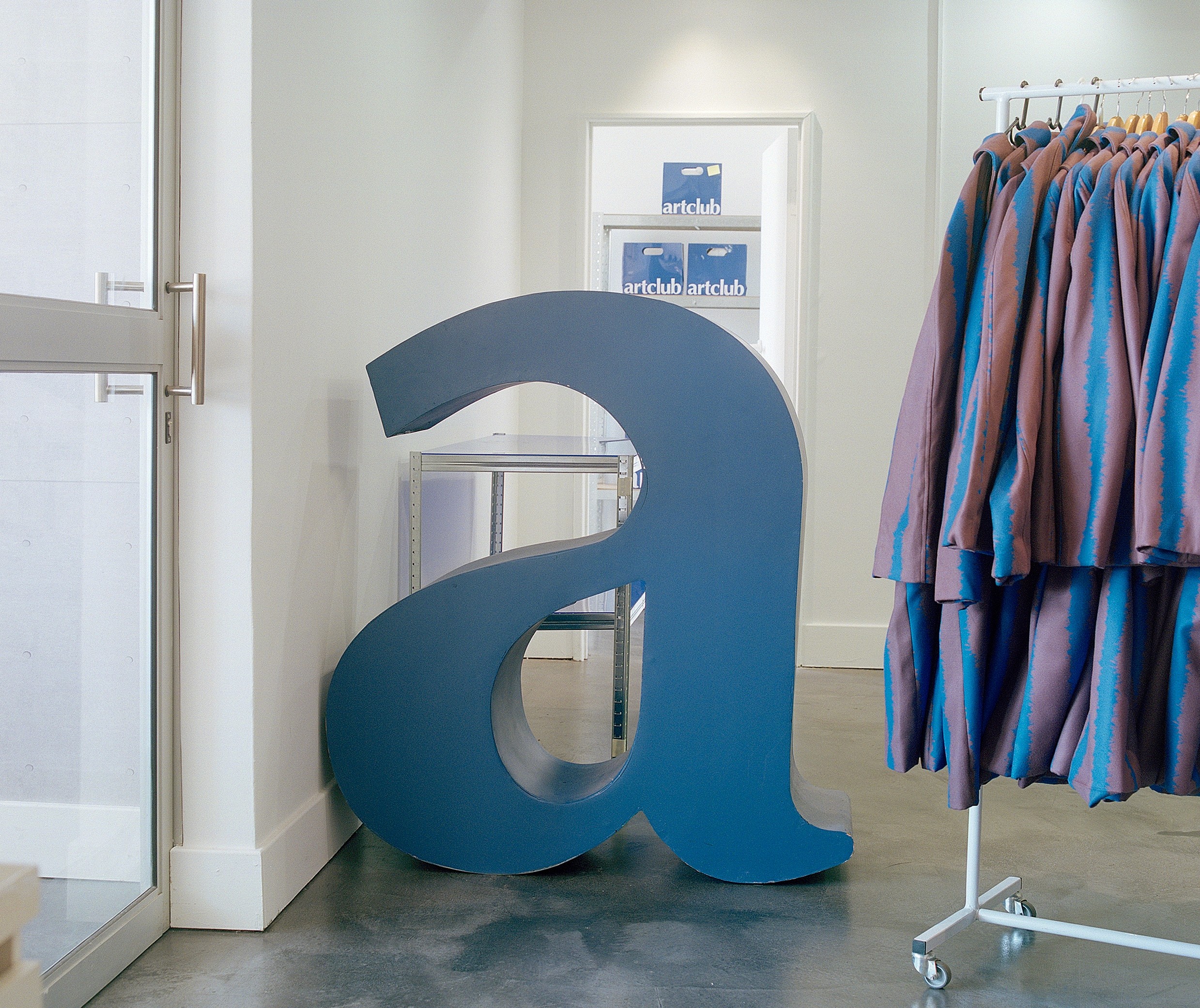
Inside Artclub and Friends’ first ever standalone store, on a full-length mirror where customers try on engineered denims, utility-inspired dungarees, or electric blue sweatshirts, are the words: “some dreams take time, this one took nine years”. Loyal fans of the cult clothing brand could shop their wares online, at weekend markets, studio sales, or curated department stores, but the perfect space for an Artclub and Friends store remained elusive—one potential space even lost to the landlord himself who was so inspired by the brand’s vision at the viewing that he opened his own shop there instead. So when the Artclub and Friends team joyously flung open the doors to their store in Johannesburg’s new design destination, Nine Yards, it felt like a homecoming.
Founder and Creative Director, Robyn Keyser describes much of her journey growing Artclub and Friends as a slow burn. She started the brand as a creative pursuit when she was 22 years old with savings from bar-tending and a job as a freelance stylist, putting everything she made back into producing stock. She remembers having a vague notion that if it took off someone would swoop in and handle the business side of things but she gradually realised that was going to be her. “It's like doing an MBA in real time,” Robyn says. “If you have no experience or mentors then you're burning your fingers, fixing, burning your fingers, fixing. In the beginning my focus was definitely on proof of concept: Do people like this idea and can I execute it well enough? And that took me a really long time to figure out.”
Like with many young South African entrepreneurs, remaining independent is more than a tagline, it’s the only option. And no matter how driven a founder is, the pace is set by whether they have the means to take the kind of financial risks that fast-track growth like hiring team members or paying for advertising. Robyn learnt time and again that even when the brand gained viral exposure, she would need organisational support within the business to really capitalise on the momentum. “I was so cautious in the beginning,” she says. “That probably dragged out quite a lot of the process. But now where we've taken a few risks, even when they don't go perfectly, they've always been worth it. So after a couple of trials and trust in that, we're slowly starting to pick up that momentum as a business, not only as a brand. We built the brand first, and now we’re building the business.”
‘The grey years’ is what Robyn calls the years-upon-years that are all grit and no glamour, steadily growing a concept into something real. It’s during this period that entrepreneurs are faced with the reality of why they started a business, and whether that reason still stands when they’ve been worked off their feet. “Pushing through isn't actually always the smart decision,” Robyn says. “If I’m being quite honest, there probably were times where I should have quit.” But in those moments, she knew that if she stopped she’d be giving up a career that challenged and motivated her: “If I'm excited about something, I'm an energizer bunny and I'm unstoppable,” she says. “I knew I could do this. It's about how badly I'm willing to ask for help and learn and accept failure here and there. I don't think it's for everyone but I really do believe that running a business is the craziest education you can go through. It challenges you emotionally, spiritually, mentally, physically, and socially.”
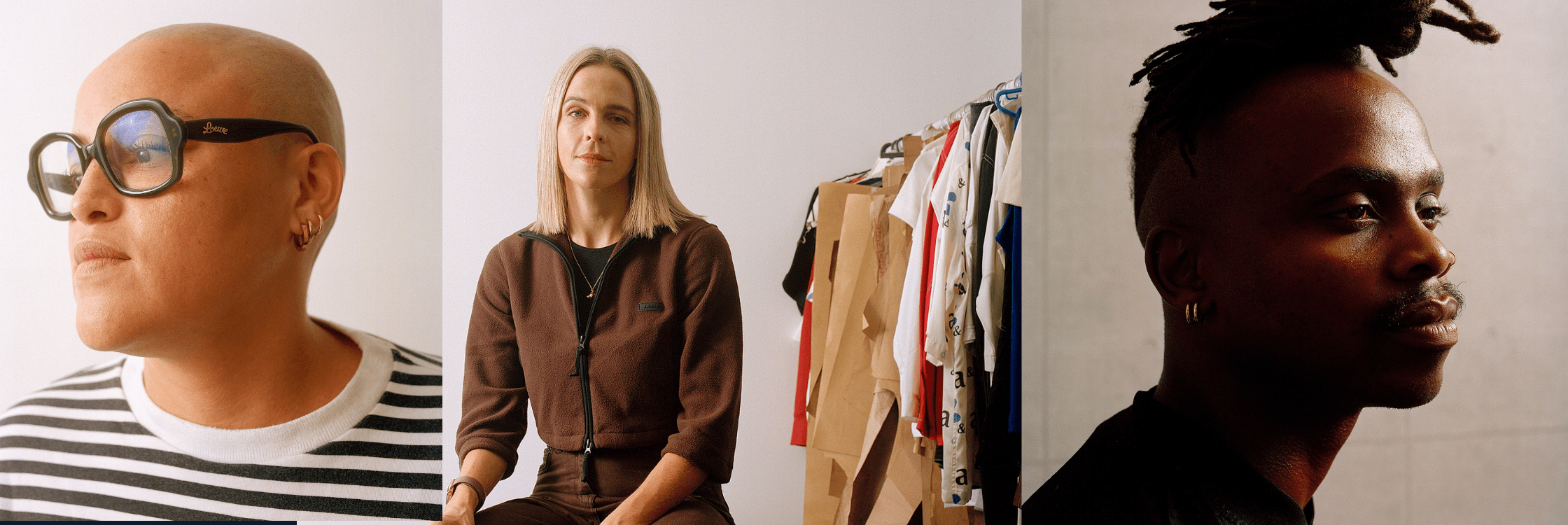
Help arrived in the form of a friend, Tanya Slater who joined Artclub and Friends in 2019 bringing structure and systems to the growing business, taking on the role of Production Manager, and eventually in 2025 becoming Executive Director. They’re now joined by customer experience and operations expert Jess Speller and Jabulani Sibiya who runs marketing and storytelling.
Though mega-watt overnight success looked very good from the fog of the grey years, the slow burn became Artclub and Friends’ unlikely superpower. Instead of participating in the crushing rush of fashion cycles, they’ve worked out their own lean, no waste model, keeping unit numbers small but innovation big. They regularly surprise customers with new drops instead of making long rails of pieces biannually that they’re then pressured to move. “We do very small quantities and trial them, and if they do well, we rerun them or bring them out in different varieties,” Robyn explains. “We're constantly improving and innovating and it's kind of the only edge we really have because we can't move massive volumes, but we can move volumes quite quickly. We're very hot on our feet and don't repeat a lot.”
Taking time to establish Artclub and Friends has also meant that the brand has a recognisable voice that remains constant even when heading down new avenues. To test the integrity of anything they do, Robyn regularly asks if her 22-year-old self would be excited about it, and if not then they’ve probably played by somebody else’s rules. While maturing as a business, it’s been critical that they stay “a little eccentric and a little eclectic,” Robyn says. “There are a lot of brands that lose their soul when they lose their imperfections, and it just becomes a well-oiled thing. It's this constant line we're treading.” When redesigning their website recently, she admits they over-designed it, removing too much personality. “It actually impacted our sales so drastically,” she says. “We slowly added all the layers back in, which are not necessarily visually-sexy but they tell our story. Suddenly those conversion rates started picking up.”
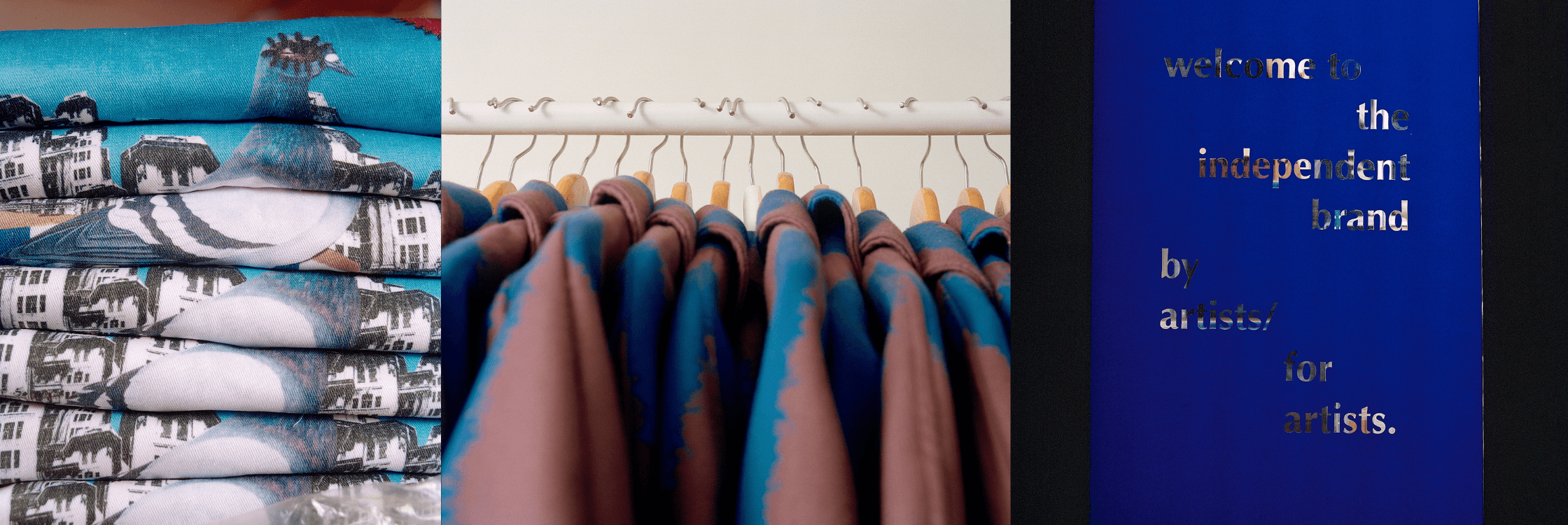
By staying true to their brand values and voice, Artclub has gained a fan-like following. They’ve identified two types of equally important customers: the brand-loyalists who buy regularly but who may never engage with them online, and the dedicated future-customers who hype up everything they do and attend all their launches even if they can’t yet afford to purchase anything. When the opportunity came up to collaborate on a collection for mammoth South African retailer Mr Price, Robyn was thrilled by the chance to design at a widely accessible price point. “South Africa has a really horrible history of exclusion,” she says, “I'm not proud of the idea of excluding anyone, whether that be by age, race, gender, body type. We have obvious economic constraints around making something accessible from a price point just because our process is extremely expensive. So the way we navigate that internally is by putting intention and consideration behind each piece so that if you are investing in a piece, you are getting as much value as possible out of that.”
When Robyn began conceptualising the Mr Price collection, she realised this was a real-time case study on what’s possible when artists have the resources and organisational support to take ‘slow’ fashion and value to a mass market. “We approached it as a research project asking what happens when we apply our design thinking to Mr Price’s resources; to elevate what we both do and see where it lands,” she says. After two years in production, in 2025 the limited edition collection launched online and in 45 stores across the country. Within one week, items were already selling out. Online, Artclub thanked their community for once again ‘pulling through in numbers’ to shop the collection. “We weren’t even sure if people were going to like it or notice it and it became this truly unexpected national success. We had people writing academic articles on the importance of it,” she says with amazement.
It’s common practice for independent designers to position their brands as exclusive luxury items. Robyn is more interested in the idea of inclusivity. “I think fashion is really exciting and can be really inspiring, but it can also be quite damaging to your perspective of yourself and how you see yourself in the world. And it can also be highly manipulative. It can be used as a tool to trick a person into thinking it will make their life better. And I don't personally believe that. I don't think fashion is the centre of the universe. I think it has to exist and therefore hopefully someone does it right,” she says. “We need to be clothed. So hopefully enough people come to it with a different perspective.”
While an incredible high point, the success of the Mr Price collaboration happened to come at a time when Robyn and her tight team were feeling the exhaustion of being only 4-people strong. On any given day she’d receive praise from peers (“You’re killing it!”) and also feel on the brink of burnout. “I think a lot of founders bully themselves into working harder and longer to grow faster, and from the outside you get applauded,” she says. Instead of forging on, blinkered, toward an arbitrary definition of success, she’s learnt that growth doesn’t necessarily equal scale. “For me it's accepting a slightly slower, longer and more enjoyable growth as opposed to that speed wobble, big blowout success, and then the wheels fall off,” she cautions, “As a small business, your ability to recover from that is actually quite low.”
A decade in, Robyn and her trusted core team have had some complex conversations about what the ceiling is as a fashion brand—Do they work towards making the leap into international markets? Do they focus on physical presence in shopping malls across the country? “None of us are very excited about scale,” she says. “We still have growth for sure, but none of us are excited about this idea of being everywhere all at once.” By taking the focus off growing as quickly as possible, it’s way easier to enjoy the process, and Robyn is grateful for the slow burn. “Our goal is not to build the biggest brand in South Africa,” she says. “Our goal is to build the most considered, most beloved, most thoughtful, smart, and lean business.”
How it started: a market stall and a card machine
Robyn launched Artclub & Friends in 2016 with a clear vision: considered design, a strong brand identity, and a deep connection with the people who wear the clothes. The brand started, as many do, at markets where the energy is immediate and the feedback is instant.
It was at one of those markets that Artclub & Friends first encountered Yoco. The ease of setup, the hardware’s aesthetic, and the quality of the experience made the decision to sign up straightforward. For a young founder navigating the early complexity of running a business, having a payment solution that simply worked — quickly and without friction — mattered enormously.
“Just being able to accept payments from the day we launched in 2016 without much barrier to entry was hugely helpful. It wasn’t very complicated, and for a young business owner that whole process can be very daunting. Just being able to get up and go very quickly has been amazing.”
— Robyn, Founder, Artclub & Friends
From those early market days, the brand grew steadily first into stockists, then into its own standalone retail spaces. Today, Artclub & Friends operates multiple locations across Cape Town and Johannesburg, runs a Shopify-powered online store, and is actively exiting stockists to focus on its own independent retail footprint. That shift is a mark of a brand and company with real, hard-won confidence.
Reliable payments across very different retail environments
Scaling from a single market stall to multi-location retail brought a new set of operational demands for Robyn and the company. Artclub & Friends runs stores with very different customer profiles from a tourist-heavy location at the Watershed in Cape Town, to one in Johannesburg where nearly all customers are local. Each environment has its own rhythm, and payment infrastructure needs to be consistent with and usable across both.
As the brand grew, the back end of their payments setup became increasingly important. Tasks that seem simple like processing a refund, accessing a sales report or getting support when something goes wrong can become real friction points when the tools aren’t intuitive. Robyn found that many payment platforms fell short here.
“A lot of the other payment gateways are not very innovative and clumsy in their back end. I love that Yoco is very focused on innovation and just good UX.”
— Robyn, Founder, Artclub & Friends
There was also the question of resilience. When a Cloudflare outage disrupted their website in late 2025, the team needed a workaround fast. Having a payment partner with additional tools in reserve, in this case Yoco Payment Links, meant they could keep selling while the issue was resolved.
The right tools, across every channel
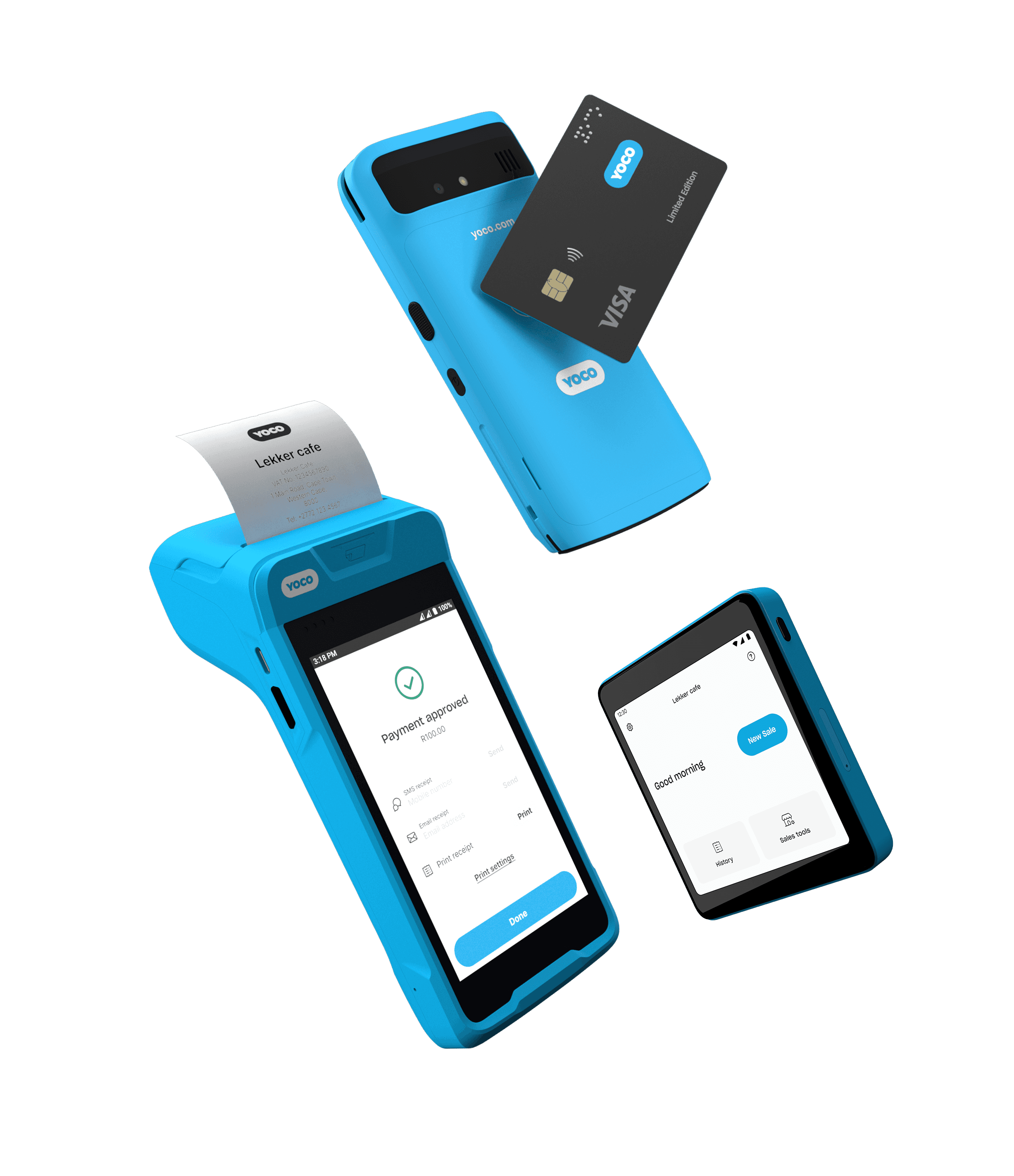
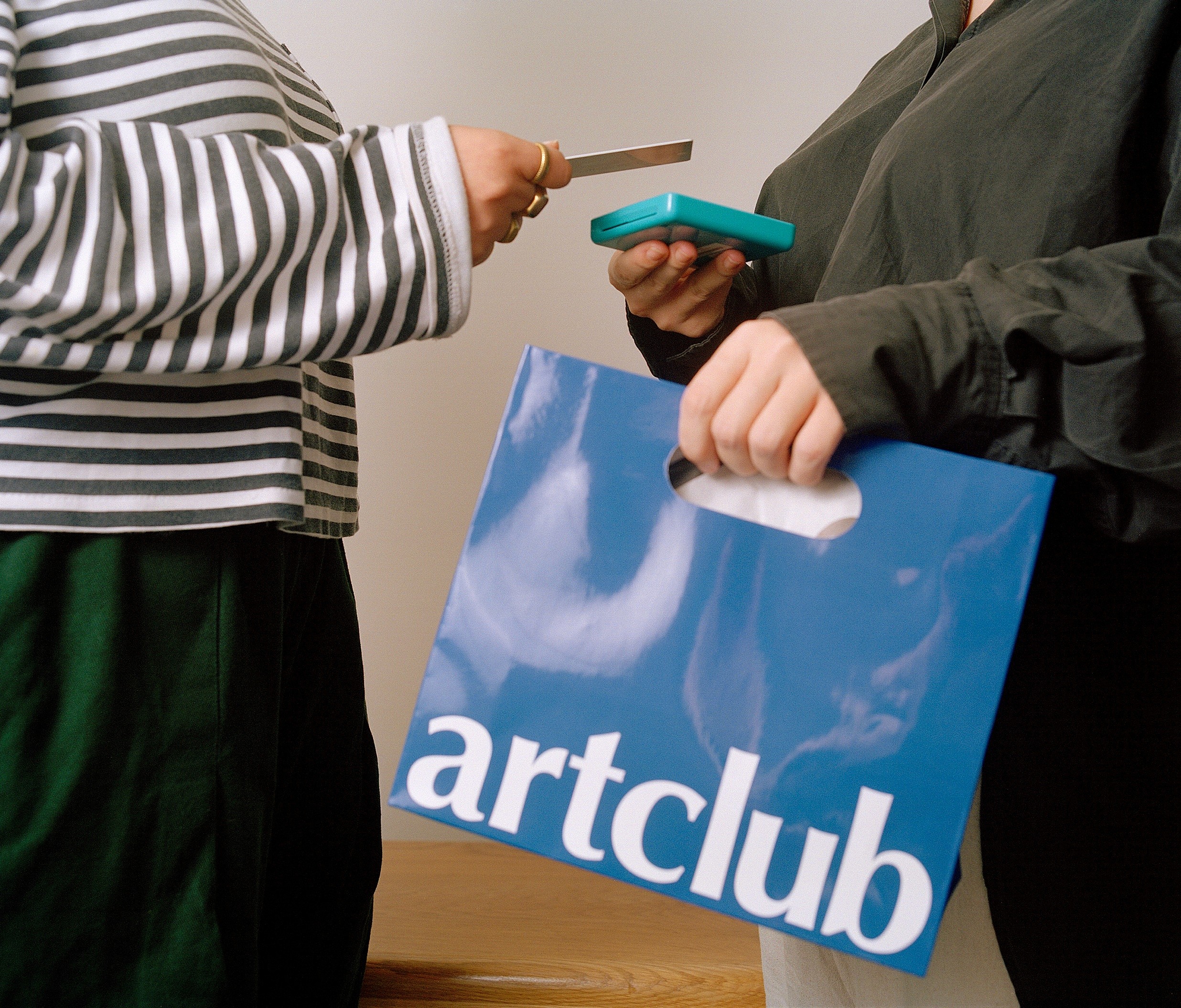
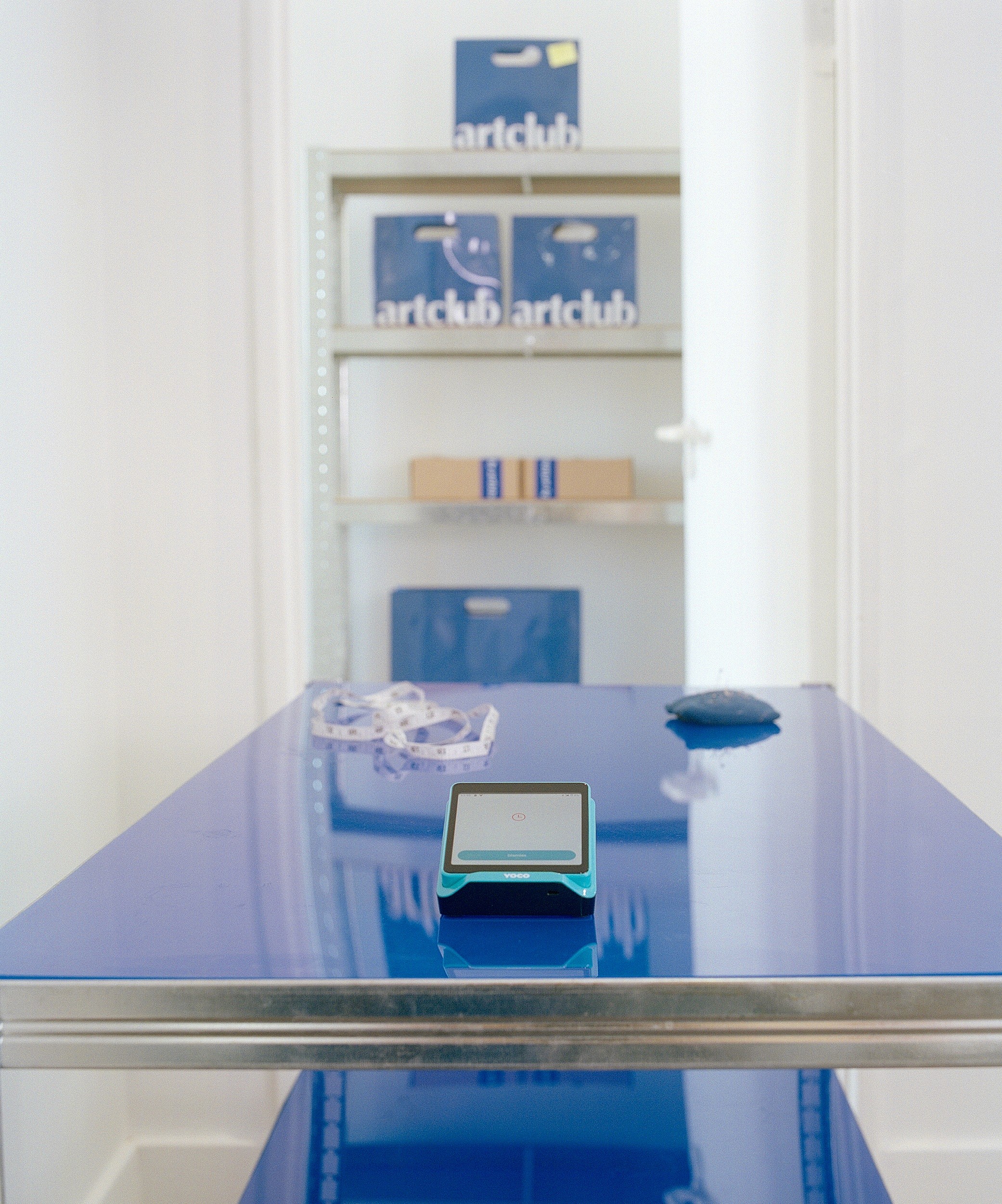
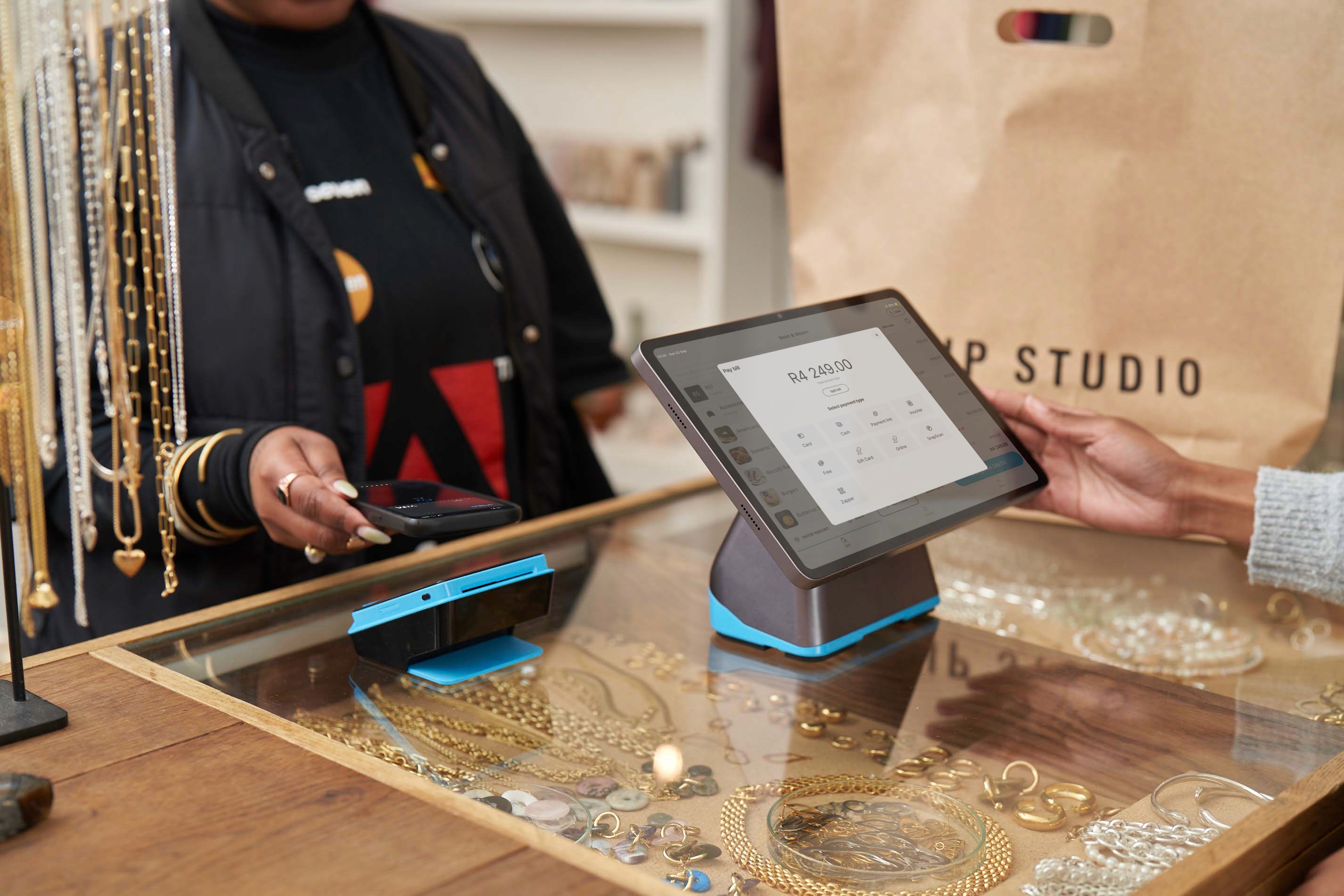
Artclub & Friends uses a suite of Yoco products across their in-store and online operations. The Yoco Neo Touch is the primary card machine at their retail locations, displayed client-facing and kept charging throughout the day. It integrates directly with their in-store POS system, Lightspeed, so the exact transaction amount is pushed to the card machine automatically which removes the risk of staff entering the wrong number at the till.
Their counter setup also includes the Yoco Neo Touch Bundle with a Thermal Printer, and the Yoco iPad Stand which is co-branded with the Artclub & Friends logo and colourway and sits at point of sale and fits seamlessly into the store’s visual identity.
“It’s all nicely branded and has our club logo and like a blue colourway in the background. So it fits really seamlessly into our store.”
— Robyn, Founder, Artclub & Friends
Beyond the product suite, the relationship has extended well beyond payments. Artclub & Friends has been part of Yoco campaigns, featured on a billboard as part of the Ride for the Underdog initiative, and received support at the opening of their first flagship store.
“Compared to many of our other suppliers or partnerships, they actually have played an active role in marketing our brand, not only their own. That’s been a really special part of our journey.”
— Robyn, Founder, Artclub & Friends
Owning the retail experience
After nearly a decade of building the brand through markets, stockists, and collaborations, Artclub & Friends is now focused on going deeper into its own retail spaces. The decision to exit stockists and concentrate on independent flagship stores is a deliberate one as it gives the brand full control over how and where the customer experience happens.
New collections, new locations, and a growing online presence mean the operational demands on the business will only increase. Having a payments partner that works consistently in-store, online, and in the moments between is what makes that next phase of growth possible.
Building a brand that lasts takes more than a great product. It requires having the right infrastructure that grows with you. With Yoco, you can start taking payments from your very first market day and scale all the way to multi-location retail without changing platforms. The same tools that got Artclub & Friends off the ground are the ones keeping them running across Cape Town and Johannesburg today.
Whatever stage you’re at, we’ve got the tools to meet you there.


Need help finding the right product?
Let us help you choose the best fit for your business.