Beyond Growth: The Data Behind Some of SA's Most Successful Independent Businesses
The numbers behind making it as a successful independent business in South Africa's economy.
11 Mar 2026
Yoco Editor
The numbers behind making it
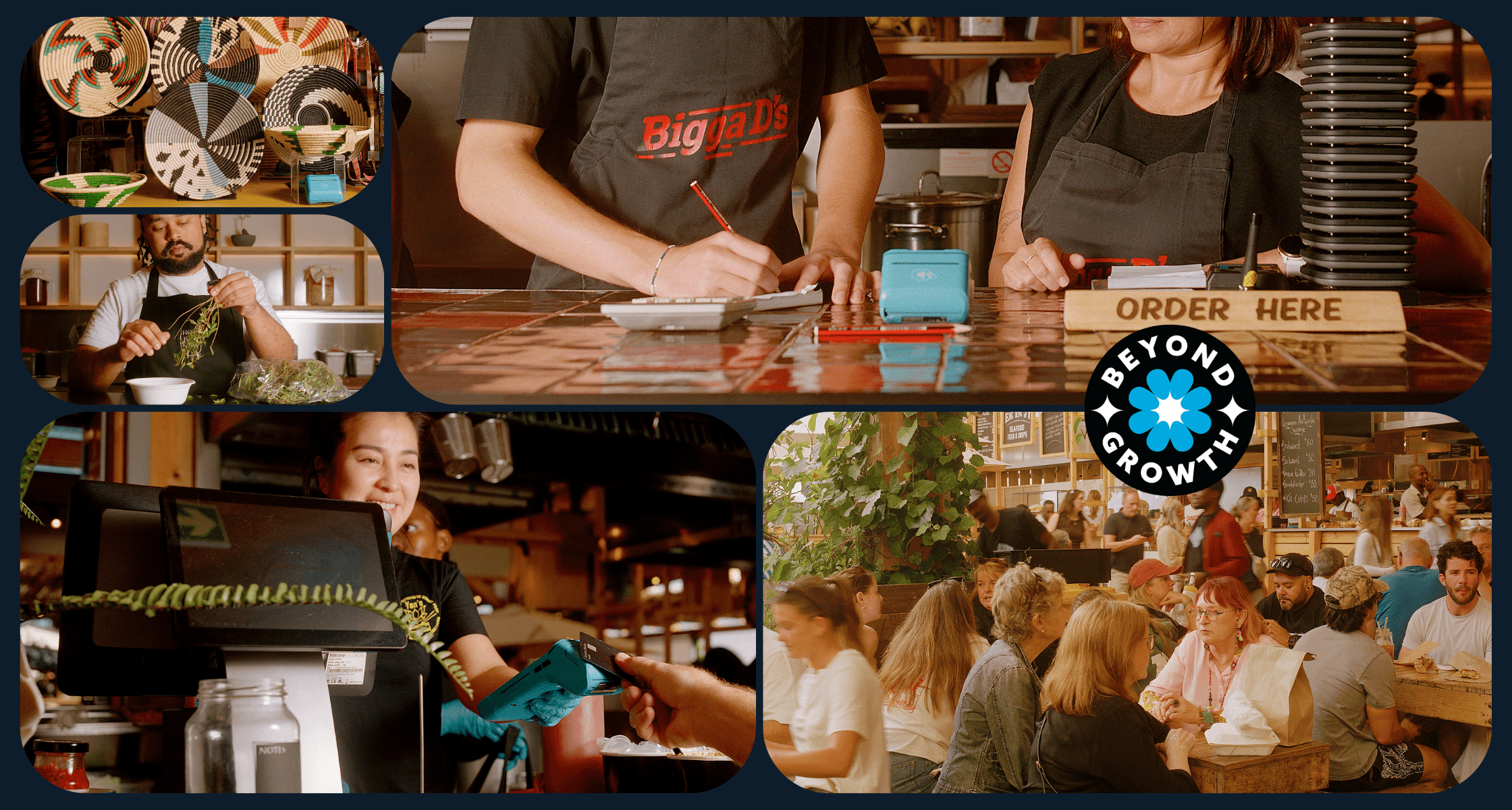
Over the past ten years, we’ve worked alongside hundreds of thousands of merchants who did not wait for ideal conditions. They built when times were tough and consumer spending was tight. They hired when demand was uneven. They adapted when supply chains faltered. They served their communities even when growth felt distant. In an economy that sometimes offered very little in return, they continued to find ways to move their businesses forward.
The Beyond Growth Report is a celebration of these entrepreneurs. It is a testament to what this looks like in practice. Over the course of this series, we follow some of South Africa’s most determined entrepreneurs as they take us through their journeys of growth and resilience.
But what does actual growth look like? Before we go behind the scenes, let’s take a look at the numbers.
A decade's worth of growth data
Yoco launched in October 2015. It was the beginning of broader access to digital payments for small businesses that had previously faced lengthy and bureaucratic onboarding processes. Our early merchants processed R13.2 million in transactions during that first month. On average, each active merchant processed R44,852.
By July 2025, 137 of those original merchants were still trading with us. Together, they processed R19.4 million in that month alone, and average per-merchant transaction volumes had grown to R141,763 - more than triple where they began.
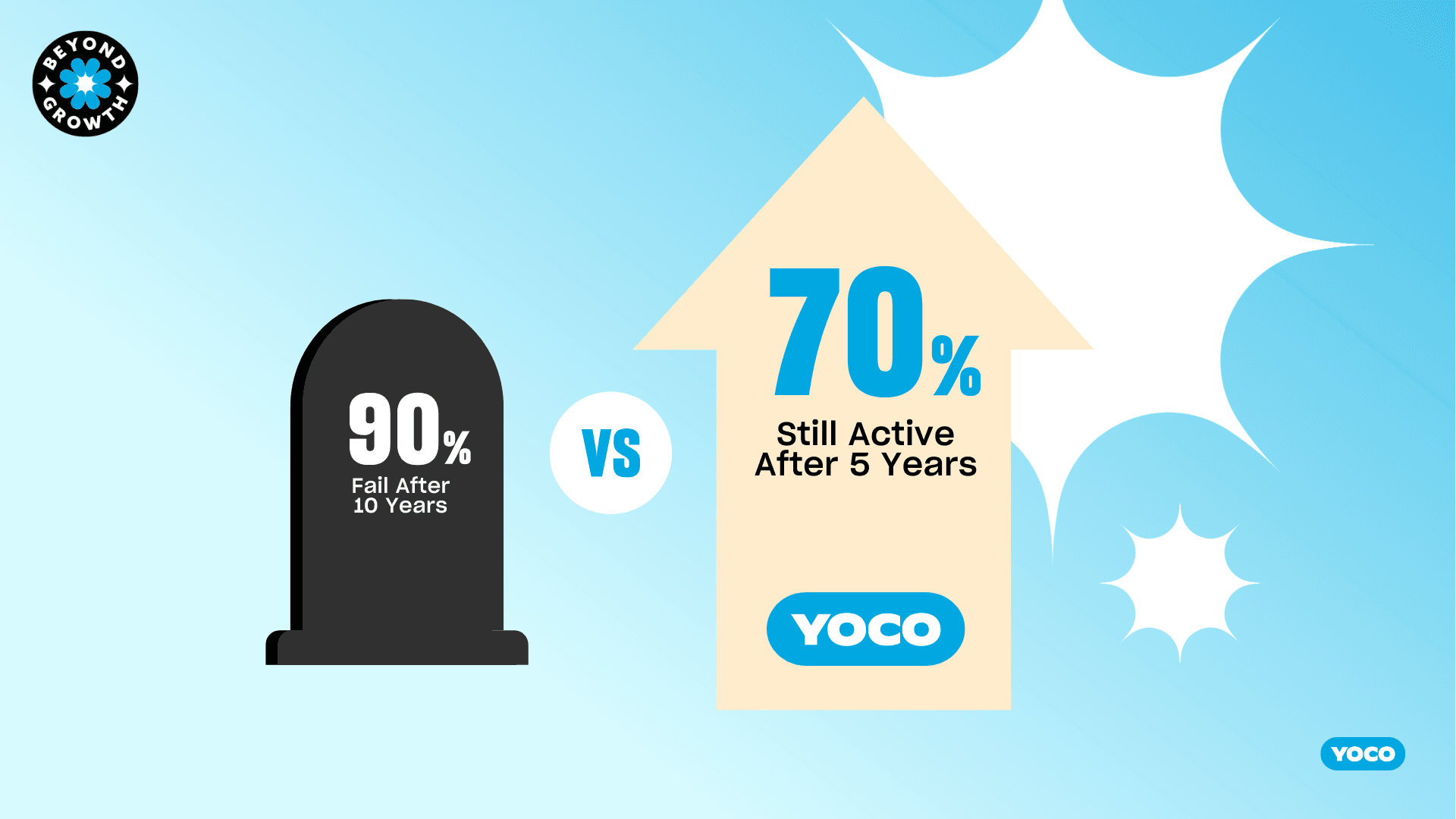
This longevity is significant in a country where approximately 90% of small businesses fail over ten years. Within that original group, 23.4% still trade daily and 31% continue to trade monthly. Across our broader merchant base, 90% of businesses survive their first year with Yoco, and 70% are still active with us after five years.
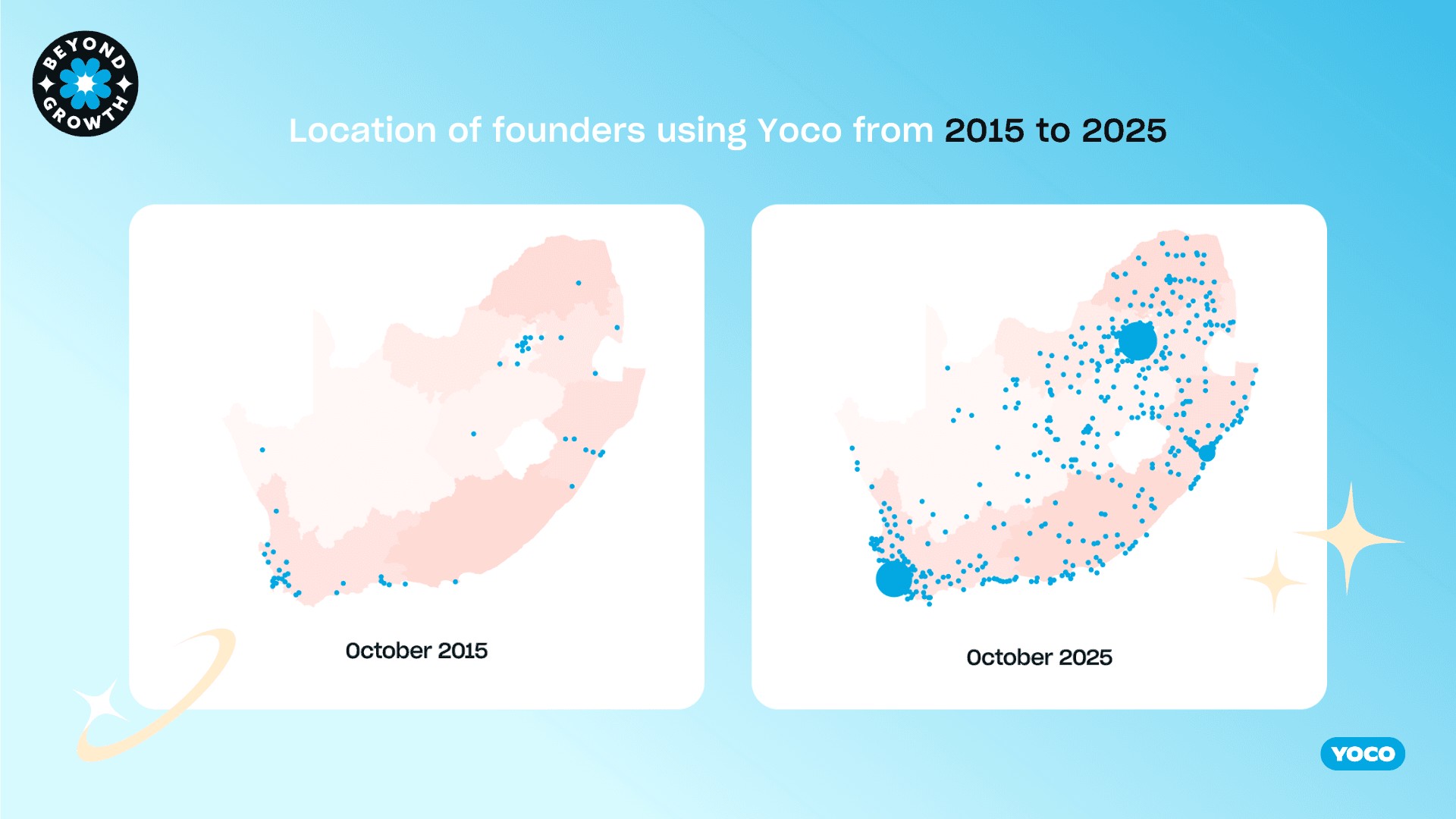
What’s more is this longevity is not limited to independent businesses based in large cities. Hundreds of thousands of founders have chosen to partner with us to grow their businesses from all nine of our provinces, and we’ve witnessed some of the strongest growth from rural merchants who now have access to tools and opportunities that were previously out of reach.
In the past 12 months alone, more than 200,000 independent businesses processed 174 million transactions through Yoco with an average growth rate of 26.9% in their first year with Yoco. Growth at this scale does not happen in isolation. It reflects a landscape of adaptable businesses who find new ways to meet new pressures, and who have a connection that allows them to meet customers where they are.
Three sectors account for much of this activity: food & beverage, retail, and health & beauty. Together, they represent the everyday economy and demonstrate the power of businesses whose success comes from being embedded in our nation’s neighbourhoods and communities.
Food and drink: Growth rooted in community
Over the past year, the number of independent food and drink businesses working with Yoco grew by 15.8%. Importantly, this growth is not restricted to new businesses alone. Around 43% of businesses in this sector have been trading with Yoco for more than five years, while 77% have been trading for more than two.
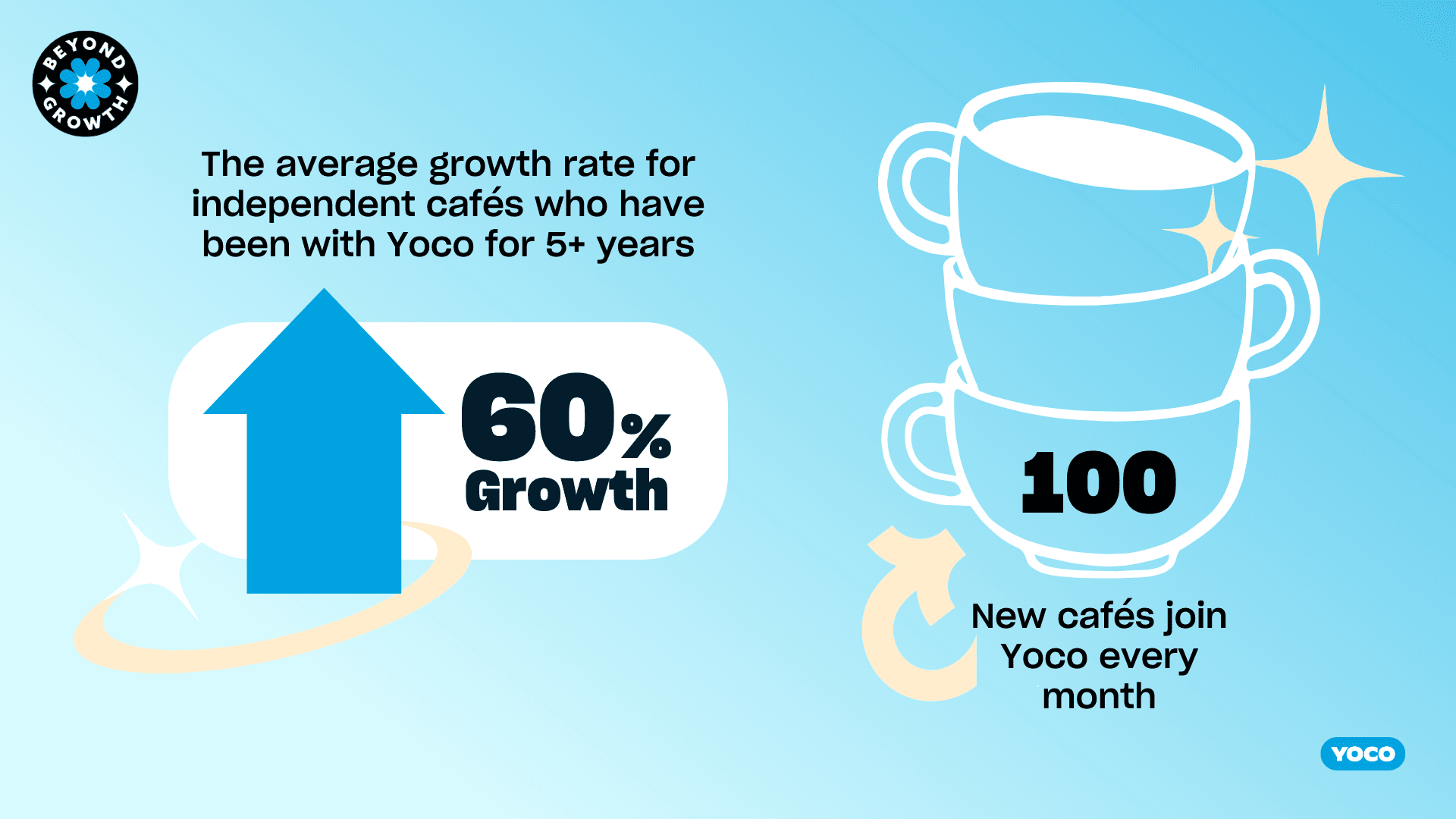
Within the category, coffee shops stand out: Independent cafés that have been trading for more than five years have recorded average growth of 60% over that period. This performance is notable in a sector where five-year failure rates can reach as high as 80% globally.
While the global food and beverage market is valued at more than $8.7 trillion, with the local market valued at approximately $45.4 billion, success at a local level is increasingly shaped less by scale and more by positioning.
Businesses that are deeply embedded within their communities, such as those who serve as meeting places, informal workspaces, and social hubs tend to show the greatest success over time. This community-driven approach has become especially important for coffee shops. In a market where roughly 100 new cafés join Yoco each month, differentiation is increasingly coming from the role a business plays within its surrounding neighbourhood.
These community-focused businesses benefit from more consistent repeat customers, lower reliance on paid marketing and greater resilience during periods of economic pressure. As regular customers build routines around these spaces, their weekday revenue becomes more predictable while word-of-mouth within local networks brings in new foot traffic organically.
Close proximity to customers also creates faster feedback loops, allowing founders to adapt menus, pricing and trading hours in response to customers’ preferences. In a highly competitive sector, these advantages combine to create a more sustainable foundation for long-term growth.
The same principle is also becoming increasingly visible in the country’s food markets. Cape Town alone has more than 22 regularly operating markets, collectively processing tens of millions of rand each year. By providing shared retail environments, they reduce overhead pressure on individual businesses while giving them access to shared foot traffic. More importantly, they foster ecosystems where vendors, producers and local communities support one another, creating new opportunities for independent businesses to grow.
This strong community foundation makes food markets attractive destinations for visitors. As Cape Town continues to dominate as one of Africa’s leading tourism destinations, markets have become important entry points into the country’s food culture. Visitors are able to engage directly with independent farmers, food entrepreneurs, and artisans, allowing tourism spending to flow more directly into independent businesses.
Retail: Quality, identity, and respect for underserved customers drive demand
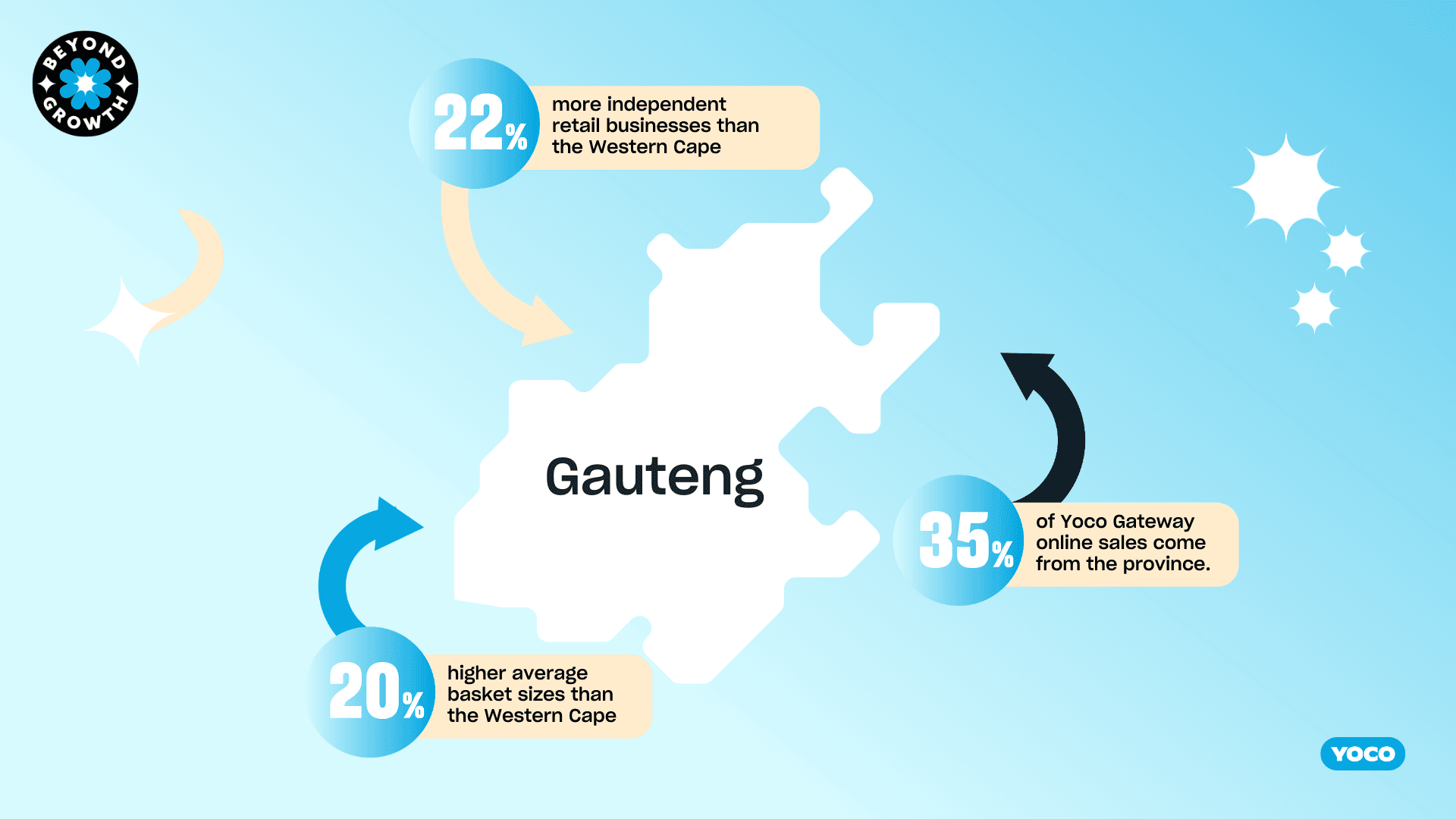
Retail remains another sector where founders are unlocking growth and the number of independent retail businesses working with us grew by 10% in 2025. Gauteng leads the country in retail performance, with 22% more retail merchants and 20% higher average basket sizes than in the Western Cape. The province also accounts for 35% of total Yoco Gateway online sales, which continues to grow as a key source of revenue for retail businesses.
Within the broader retail segment, clothing businesses in particular are seeing strong momentum. The most successful of these have found success by serving customers whose needs have historically been overlooked by mainstream retail.
One area where this shift is particularly visible is inclusive fashion. Globally, the size-inclusive fashion industry was worth approximately $244 billion in 2025, with 7% year-on-year growth that outpaces the broader apparel sector. Locally, the market is estimated to be worth around $1.4 billion, highlighting a significant opportunity for businesses serving customers who have traditionally had limited choice when shopping at larger brands or retailers.
At the same time, growing fatigue with fast fashion is creating new opportunities for independent brands and their founders. As many consumers are becoming more intentional about what they buy, independent retailers have responded by offering alternatives built around craftsmanship, smaller production runs, and more sustainable business practices.
This dynamic extends across the wider apparel sector. South Africa’s clothing market was valued at roughly R235 billion in 2025, with projected annual growth of around 6%, while footwear alone was worth over R27.6 billion.
As global fashion and sneaker markets become more expensive and less locally tailored, many consumers are turning toward businesses that better reflect local styles, communities, and preferences. For independent retailers, offering credible local alternatives that feel relevant, accessible and respectful of customers allows them to compete against larger international brands. This competitive advantage in a large, lucrative market has seen the number of independent clothing founders using Yoco products grow 26 fold over the last decade.
The generational shift in entrepreneurship: More than half of independent business founders are Millennials and Gen Z
Globally, younger generations are now the fastest-growing group of founders, with more than half of Gen Z reporting some form of freelancing or self-employment in 2024. This trend is also visible across Yoco’s base where younger business owners are playing a leading role.
South Africa has one of the highest rates of youth unemployment globally, currently sitting above 45%. At the same time, many traditional entry points into employment have become increasingly constrained: Degrees no longer guarantee access to stable or well-paid roles, and the number of junior and entry-level opportunities has declined. In this context, it makes clear sense why many young South Africans are turning to entrepreneurship as an alternative to more traditional forms of employment.
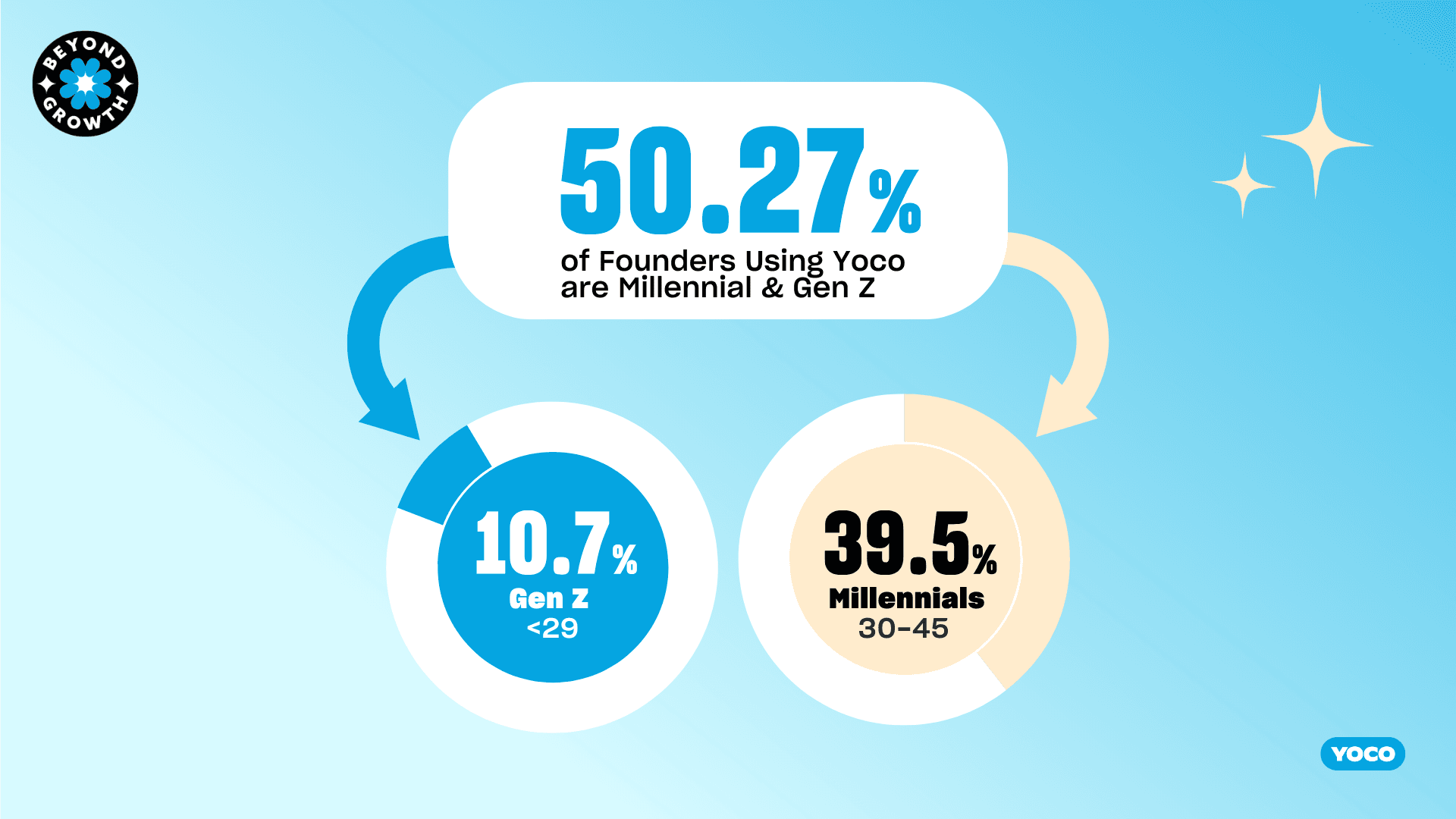
More than half of Yoco independent businesses are founded by the Gen Z and Millennial generations, with 10.7% belonging to Gen Z, and a further 39.5% being millennials.
For many of these young founders, entrepreneurship is also an opportunity to build businesses aligned with changing consumer values.
Younger entrepreneurs are responding to growing demand for quality, sustainability and more intentional consumption from consumers from these same generations. As a result, many are building brands with a strong focus on craftsmanship, identity and long-term impact rather than short-term sales.
Online platforms, social media, and direct-to-consumer business models are lowering the barriers to entry for young founders across online retail, apparel, and beauty. That’s also reflected in the data: More than half of founders in these sectors are under the age of 40.
While younger entrepreneurs are playing an increasingly important role in South Africa’s small business landscape, entrepreneurship is not limited to one or two generations. Across Yoco’s base, 27.8% of founders are over the age of 55, and 9.6% are aged 65 and older, suggesting that the traditional retirement age opens the door to a new phase of professional life for this age group.
Women Entrepreneurs Take the Lead
Women continue to play a crucial role in South Africa’s entrepreneurial economy and supporting communities: The share of female-headed households increased from 32.4% in 2014 to 36.1% in 2023 alone.
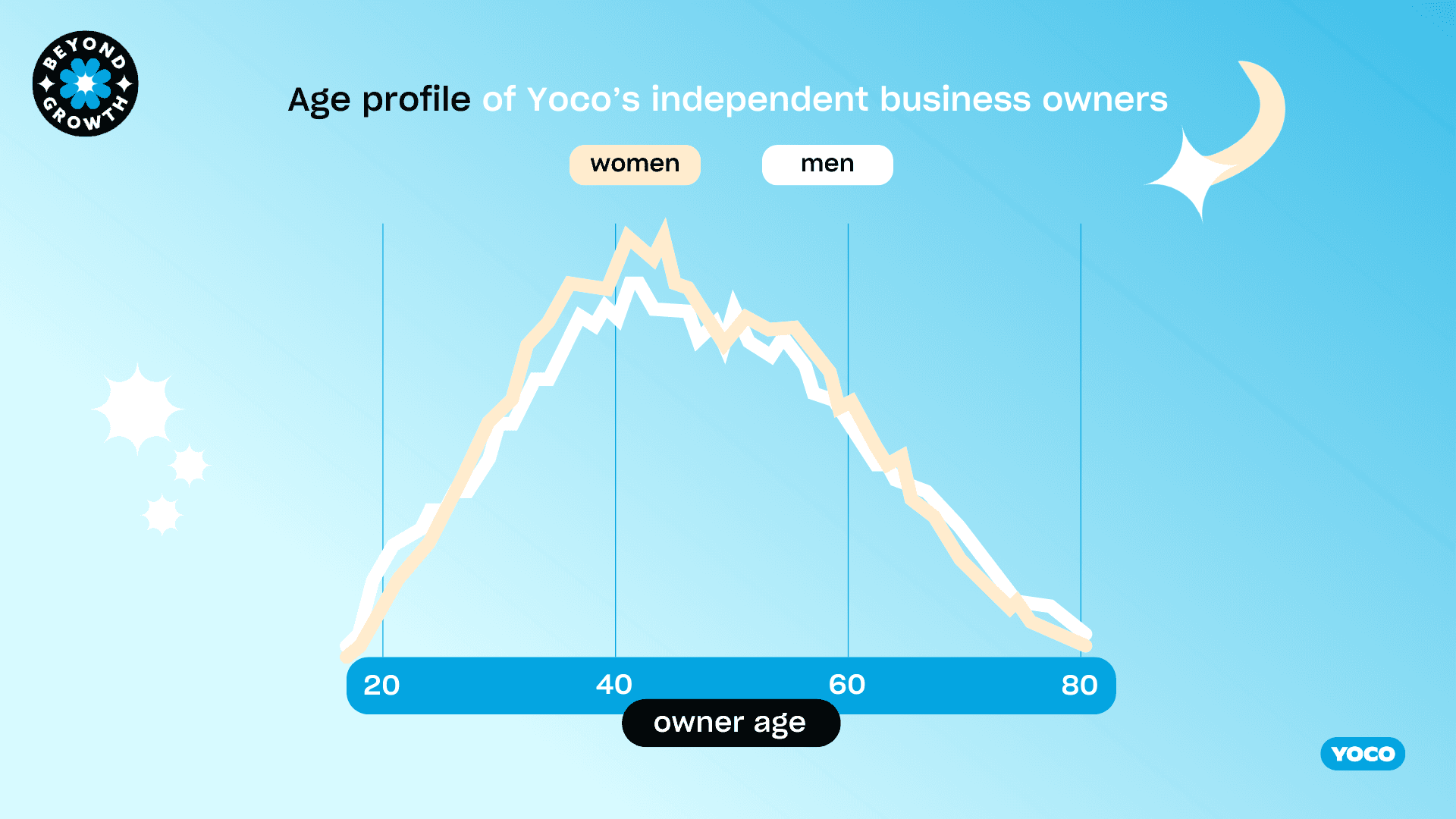
For many women, entrepreneurship is an accessible pathway into economic participation. Across independent businesses partnering with Yoco, business ownership is now evenly split between men and women.
The health & beauty sector stands out here, where women-owned businesses dominate this lucrative market. Over the past 12 months, health and beauty merchants generated R324 million in transaction value in Johannesburg alone, while the number of independent businesses in the segment grew by 11%.
This reflects global momentum for an industry projected to be worth $736 billion by 2028 as consumers increasingly prioritise spending linked to wellbeing.
Part of the sector’s strength lies in its accessibility. Many founders are able to open home-based salons and businesses with lower overheads, and can scale through online sales and markets, leading to dedicated premises at a later stage in their growth journey.
We can see this playing out in the data which shows how online commerce is becoming the key driver of this growth globally. On average, digital sales are growing 9x faster than the value of in-store transactions. Locally, 43% of beauty purchases took place online through Yoco Gateway in 2025.
Real Stories of Making It
Across the sectors we’ve explored, independent businesses continue to thrive through finding opportunities for growth because they understand their customers deeply, respond to unmet demand, and remain closely connected to the communities they serve.
Ten years of Yoco transaction data shows that small business growth in South Africa has not been driven by short periods of economic optimism. Instead, it has been gradual, adaptive and resilient, persisting through real constraint. Beyond Growth is not a story of overnight success or rapid scale, but of steady resilience that’s visible in repeat customers, consistent trade and businesses that continue their evolution year after year.
Today, the next phase of growth is increasingly shaped by helping founders manage operational complexity, as their businesses expand staff, products and sales channels. Here, integrated POS tools are giving founders back time to focus on what matters most: Running a thriving business.
Stay tuned as we take a closer look at some of our inspiring merchants behind these numbers, and what their journeys reveal about independent business in South Africa.
Let’s grow.

Need help finding the right product?
Let us help you choose the best fit for your business.