Beyond Growth - Volume 2: How Stephan Bredell grew Platō Coffee
We chat to Stephan Bredell of Platō Coffee's unconventional path into the coffee business and his community-driven strategy.
02 Apr 2026
Yoco Editor
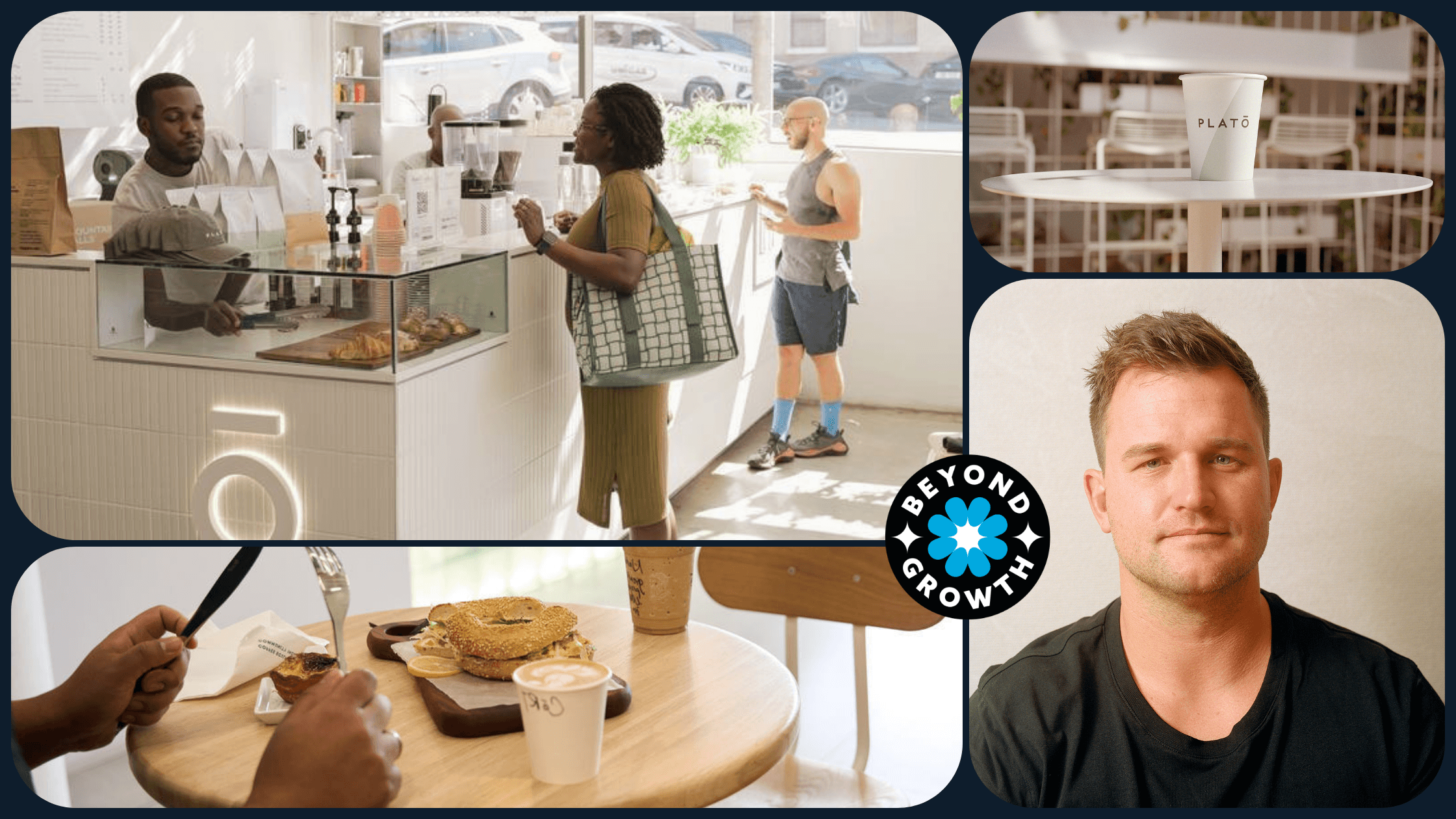
Stephan Bredell will tell you he's not a coffee guy. He's an entrepreneur, and coffee was the vehicle. When he and his brother Petrus launched Platō from a modified shipping container in Irene in late 2019, a global pandemic arrived shortly after, and instead of ending them, it revealed exactly what they were building. Neighbours lined up outside that container not just for the coffee, but for each other. Community, it turned out, was the product.
Platō now has over 130 locations across South Africa. They’ve taken a different expansion approach from traditional coffee chains, focusing on underserved communities from mining towns to seaside villages.
We sat down with Stephan to learn about his unconventional path into the coffee business and his community-driven strategy at its core.
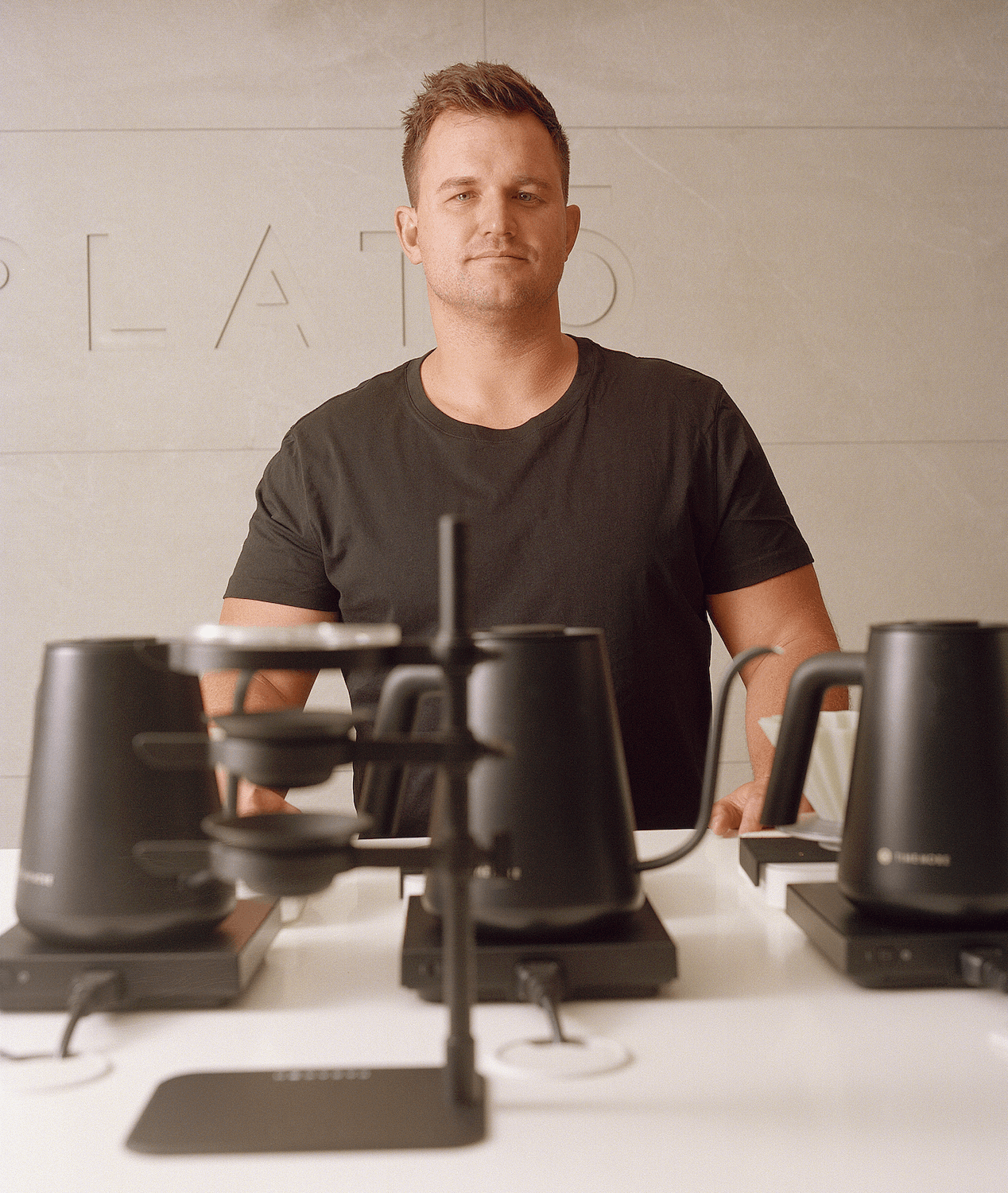
Before Platō Coffee, CEO & Co-founder Stephan Bredell was never a coffee guy. “I’m an entrepreneur,” he says, “and coffee was the vehicle.” When Stephan launched Platō together with his brother Petrus Bredell in late 2019, he was working a full-time corporate job rebuilding after a few “bloody noses” he’d received in his quest to turn his many ideas into businesses throughout his early career. His idea for a coffee brand would have to be bootstrapped; Stephan on brand and Petrus on learning the craft of coffee roasting.
The brothers rented all the equipment they needed to start, and began selling coffee from a modified shipping container at a memorial site in Irene, a suburb that’s often referred to as a ‘village’ on the outskirts of Centurion. They’d only been trading a few months when in early 2020 the whole world shut down. There are many start-ups whose stories end with ‘and then COVID-19 hit’, but as Platō Coffee was operating from their container with an informal trader’s license, they found themselves in a legal loophole where they were permitted to trade.
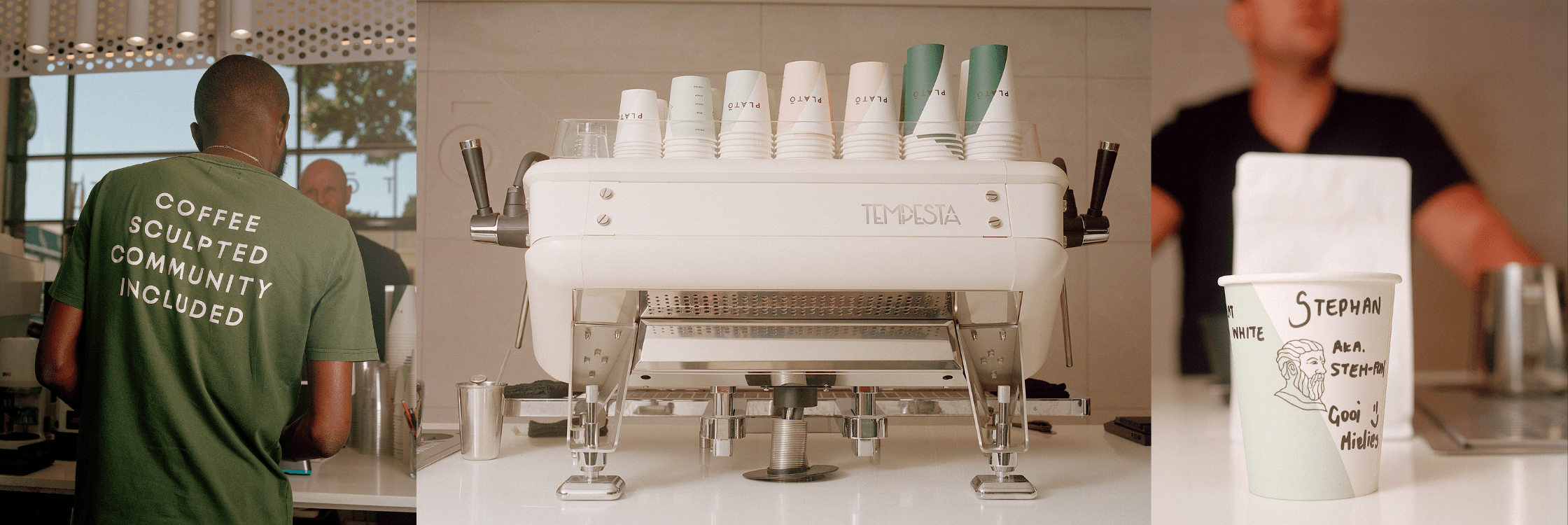
After the first few weeks of heavy lockdown, when citizens were permitted outside of their homes between certain hours in the morning, something extraordinary started happening. Neighbours were lining up for coffees desperate for interaction with people they didn’t live with; hanging out, catching up, and sharing news. Stephan said he realised then that coffee was the conduit for connection, and that community would be what they were selling. “Somebody asked me the other day how this ‘community thing’ looks practically, and for me it’s a barista knowing your name and knowing your regular drink, or sub communities meeting at the local coffee shop,” he says. “So yes, we're selling coffee, but the magical thing about coffee is that it’s got this way of bringing people together. If I want to have a meaningful chat with you, even if I don't drink coffee, I'd say ‘Let's get a coffee’.”
The Bredell siblings grew up moving between small mining towns in the north of the country which gave them firsthand insight into the social and economic landscape of places that might never see the type of trendy coffee shops that anchor in capital cities. Overlooked by bigger brands, these unlikely places became Platō’s first locations. “I think people in big cities have the misconception that there's no money in smaller towns. But because I grew up there I saw there was always an ‘oomie’ with a nice Mercedes or a big house,” Stephan says. Launching in smaller towns fostered strong brand loyalty and a sense of ownership within communities all too used to being skipped over. A sentiment that Platō often gets is ‘Thank you for thinking of us’.
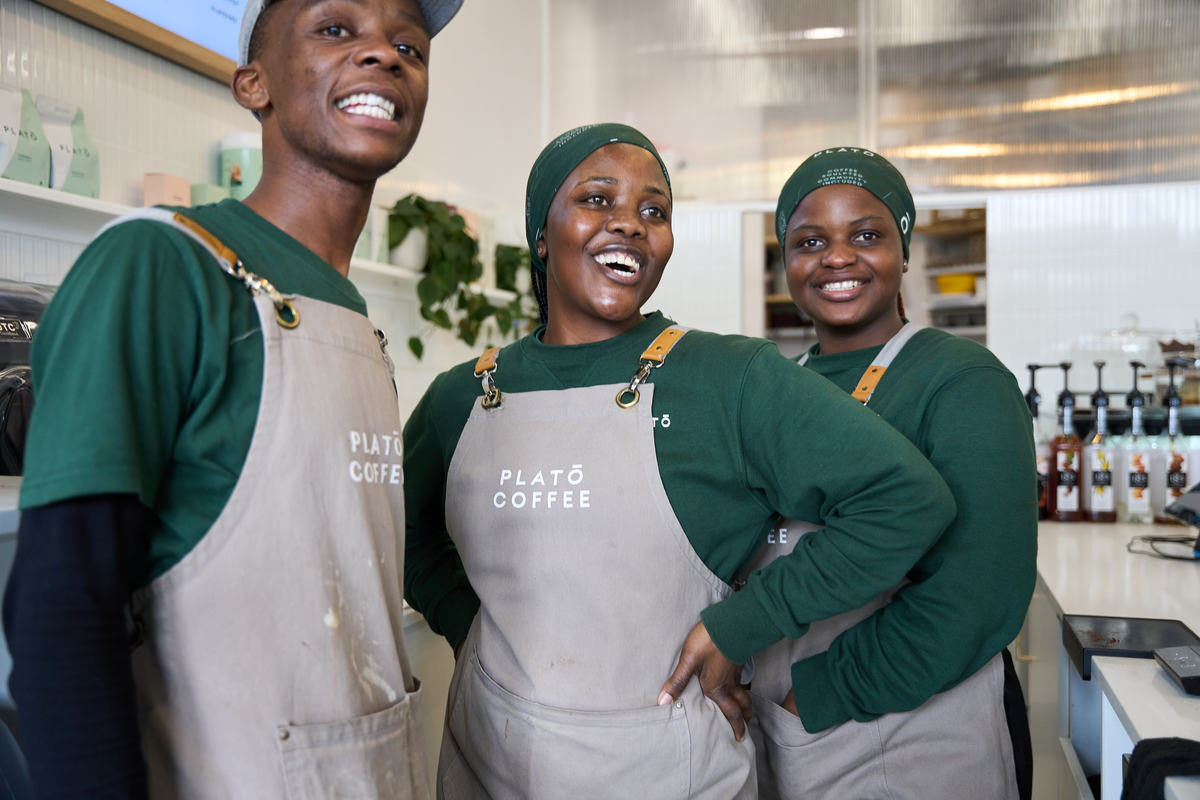
Another of Platō’s guidelines for choosing locations is to look for where people are already “doing life together”, as Stephan puts it—meeting up to exercise, walking dogs, or dropping kids at school. And, while Platō serves specialty coffee from sleek and strikingly designed spaces, from the very beginning they’ve endeavoured not to make anyone feel intimidated by coffee snobbery. “You're welcome to drink the large cappuccino with seven sugars,” Stephan says. “Everybody’s welcome. With community comes kids—Dad drinks a cortado, but the son wants a freezo.” It’s an attitude that resonates with their customers, and Stephan enjoys stories of people ordering coffee however they please, with whipped cream or flavoured syrups, free from judgement. “Coffee will always be our core, but we’ve made it about much more than coffee,” he says. “I always say ‘do you want to be cool or do you want to make money?’”
It was around 8 stores in, when Stephan realised it was time to leave his day job to run things full time, and once they introduced franchises Platō’s footprint grew rapidly—from mining towns to university towns, seaside villages to major cities. They’re currently sitting at over 130 locations with many more in the pipeline. In order to maintain their brand integrity while entrusting it to others, there are specific criteria for franchisees to meet, primarily that the owner must also be the manager who runs the shop and lives in the area. “Coffee is not just transactional, it’s relational too,” Stephan says. “We’re looking for community builders, and it helps if your franchisee is already entrenched in the local community.” In interviews Stephan often mentions one of their franchisees Gerda in Mokopane as an example of the perfect fit. She’s been a fixture of the area for 25 years whose kids went through school there. “Everybody knows Gerda,” he says. It’s a personal approach, but it’s also sound business sense; the franchises run by guardians of your brand who are personally invested in its success and come with a built-in customer base are the most likely to succeed.
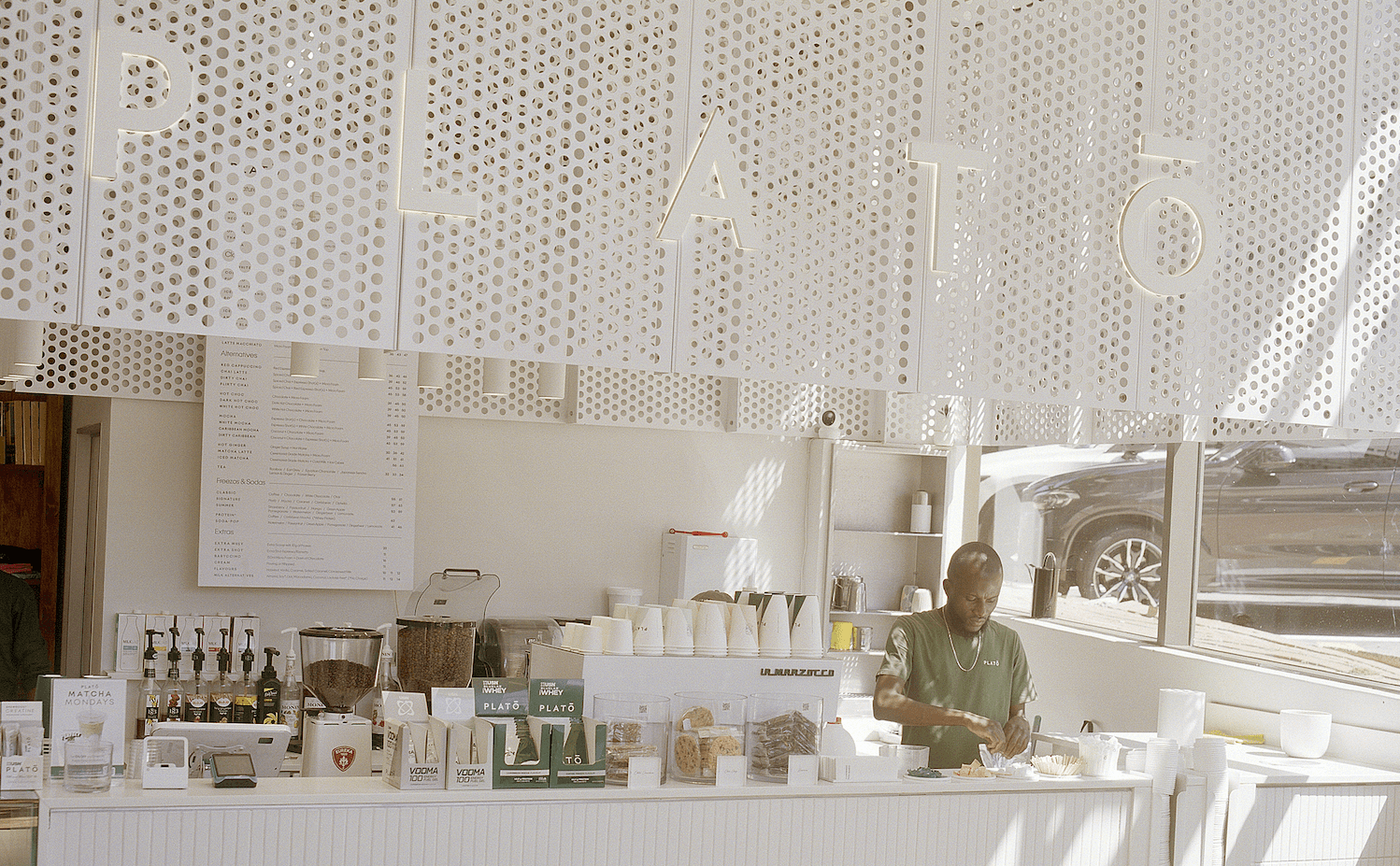
The brothers were about 40 shops in when they opted to scale through a private equity deal. The roastery had become a full-time occupation for Petrus, and with the outside investment it’s grown into Blank Supplies, a separate entity that has capacity to roast for other national coffee chains and restaurant groups. Within a holding group called Slingshot, Stephan is building an entire eco-system of businesses that integrate horizontally with Platō: a bakery that supplies all the cafés, a company that sells coffee equipment, an interior architecture firm that designs all the stores, and of course Blank Supplies who delivers on coffee. This infrastructure feeds their consuming-facing brands, not limited to Platō.
Even now, Stephan says that in the back of his mind is always the question, “Are we out of the woods yet?” But he describes himself as ‘a bit of a brand guy’ and ‘a bit of a cowboy’ who can’t help dreaming up new ideas and then trying to get them off the ground. “When I die there’s probably going to be another hundred companies underneath Slingshot,” he jokes. “It’s just fun.” But he’s also a husband and a dad to four boys, and says his biggest fear is not of failure, but of success at the cost of what’s most important to him. “I don't want to build this empire and then have no relationship with my kids,” he says. “If you say yes to something, you have to say no to something else.” When he’s requested to appear on various podcasts or at speaking events in other cities, he considers what he’d be missing: “It means I’m not seeing my wife in the morning, we're not drinking coffee together, I'm not seeing my boys.” Life as an entrepreneur is like a juggling act, and Stephan is keenly aware of the metaphor where some of the balls are rubber, and others are glass—at home and at work, the ones he can’t drop are the people.

Two years ago, Stephan and Petrus’s mother shared some wise advice with her sons: to stop growing wide and to start growing deeper. So instead of just getting bigger, they’re taking this year to fine-tune what they’ve built. “What happens with exponential growth is that your infrastructure lags behind,” Stephan says. “You build, and build, and build, and gear towards launching new shops and then you realize you’ve got 100 franchisees who need attention. So this year is a massive focus on their support structure. If we say ‘community included’ in our tagline, that also means our franchisees and our staff, and checking that everyone’s okay.”
One of the “bloody noses” that Stephan suffered in the years pre-Platō stung more than others. The knock shifted his perception of success and showed him the trap of tying your identity to your finances. “For me the definition of “I've made it” is if I understand what my purpose is in life and what brings me joy,” he says. “I realised money doesn't buy happiness. You can buy a lot of stuff but if you don't have a real purpose and aren’t enjoying your life, you're never going to feel like you've made it anyway.” In the last year or two Stephan’s realised that nothing brings him greater joy than helping people to grow their own businesses and improve their lives. Part of the reason why Platō has never sold more than a handful of franchises to one big franchisee is that there’s so much fullfillment found in sharing the journey with people starting out like they did.
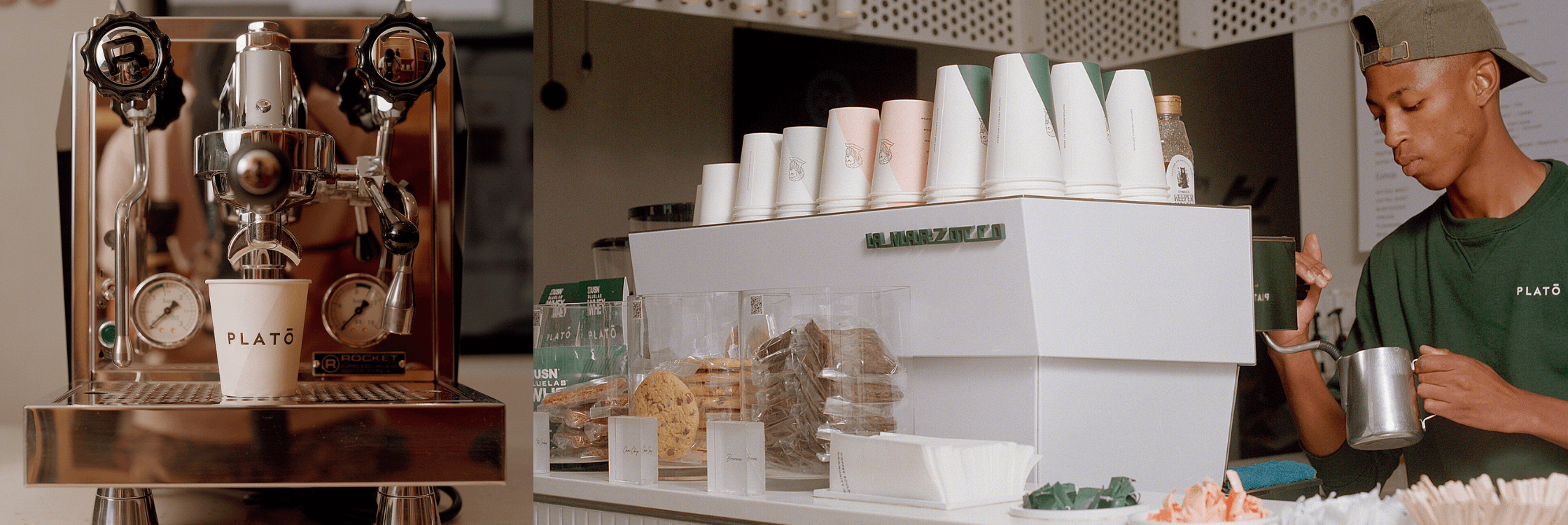
As Platō further matures as a company, streamlining their operations to better serve their community, they’re still finding uses for that initial cowboy spirit. An imminent project is their first store opening in London, exporting their particular brand of South African warmth and friendliness. “I think that's actually one of our biggest differentiators at the moment,” Stephan says. When assessing the risk, he figured that if they fail they lose the value of one big store but if it sticks the potential could be tenfold. “I always say I'm just dumb enough to think something’s going to work,” he says smiling. His approach is to eschew the over-analysing and just do it, then you’ll know if it works or not instead of wondering. With a 23 metre wide storefront, in central London, next to one of the city’s busiest train stations, Platō is certainly going in with a bang. “We're going big,” Stephan says with anticipation. “We were like, ‘Okay…let's take our shot.’
How Platō keeps a fast-growing franchise running as one
From day one, Platō has been powered by Yoco, keeping transactions as frictionless as the welcome at the door. But as the network scaled from one shipping container to over 130 locations, the challenge stopped being about payments alone. It became about running a franchise without it feeling like 137 separate businesses.
The challenge of keeping up with your own growth
Running a franchise at scale is a different problem from running a single store. Every new location adds to the reporting load, and for Platō, one pressure point stood out: royalty reconciliation. Calculating what each franchisee owed meant pulling sales data from every location manually, one store at a time. That process was slow, inconsistent, and not built for a network growing at this pace.
“I used to spend eight hours pulling sales and stock data from every store. Now I can do it in seconds with one click.”
— Harry Mole, COO, Platō
One view across the whole network
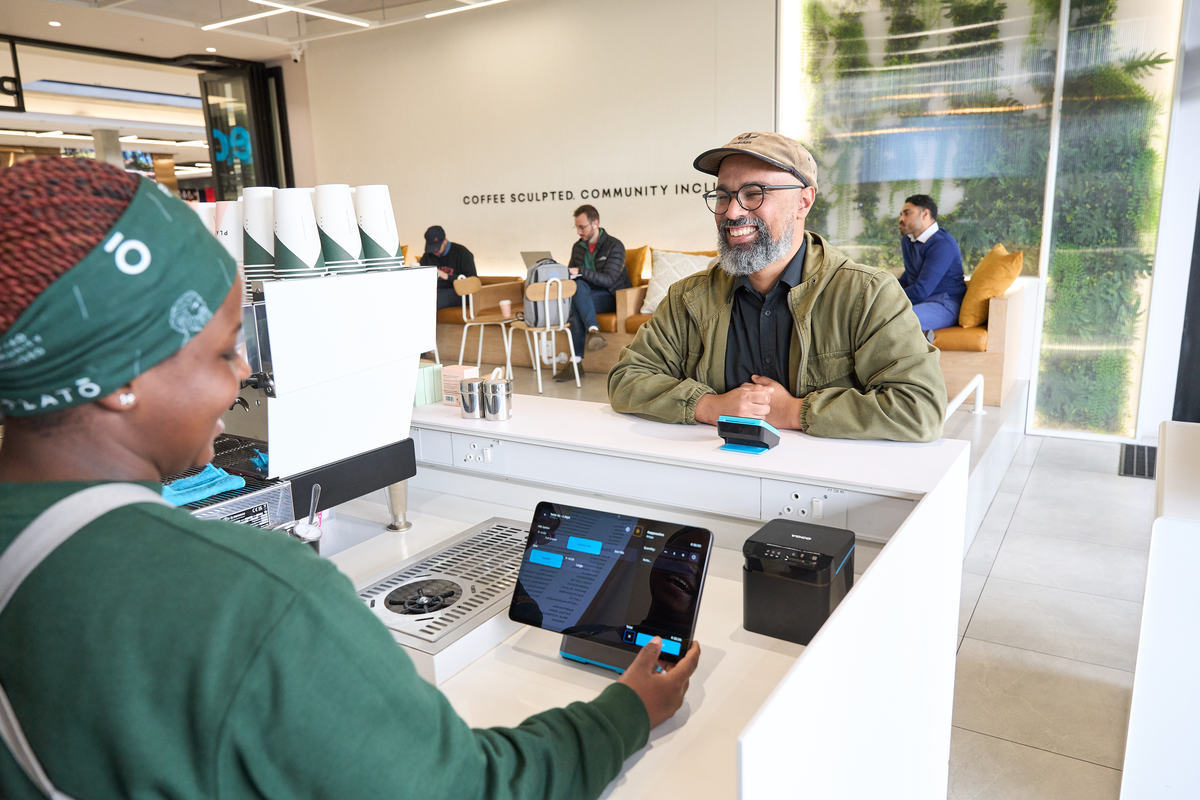
Yoco POS and Yoco Neo Touch machines gave Platō's head office a consolidated view across every store. Royalty calculations that previously took hours of manual work can now be completed in a fraction of the time, from a single source.
Onboarding new franchisees became faster too. A consistent setup across the network means new locations can get trading sooner, a speed of integration that matters when you're opening at Platō's pace.
And for baristas at the counter, the POS integration with Neo Touch made checkout faster and tipping easier for customers. Reliable tipping can be life-changing for staff. One store, after the switch, saw monthly tips jump from R10 000 to R31 000.
From a single shipping container to 137 locations
Platō first traded on Yoco in mid-2022 from their original Irene location. In the 18 months that followed, the franchise grew to 27 locations. Then, from December 2023, they added the next 110 in just 27 months.
April 2024 marked a turning point: 17 new franchise locations joined the Yoco network in a single month. From March to June 2024, Platō's monthly turnover doubled for three consecutive months. By early 2026, the total had reached 137 active merchants on the platform.
What's even more impressive is the consistent growth coming from existing locations. Between 2023 and 2025, average sales per location increased by roughly 60%, a signal that the community is not just growing wider, but deeper.
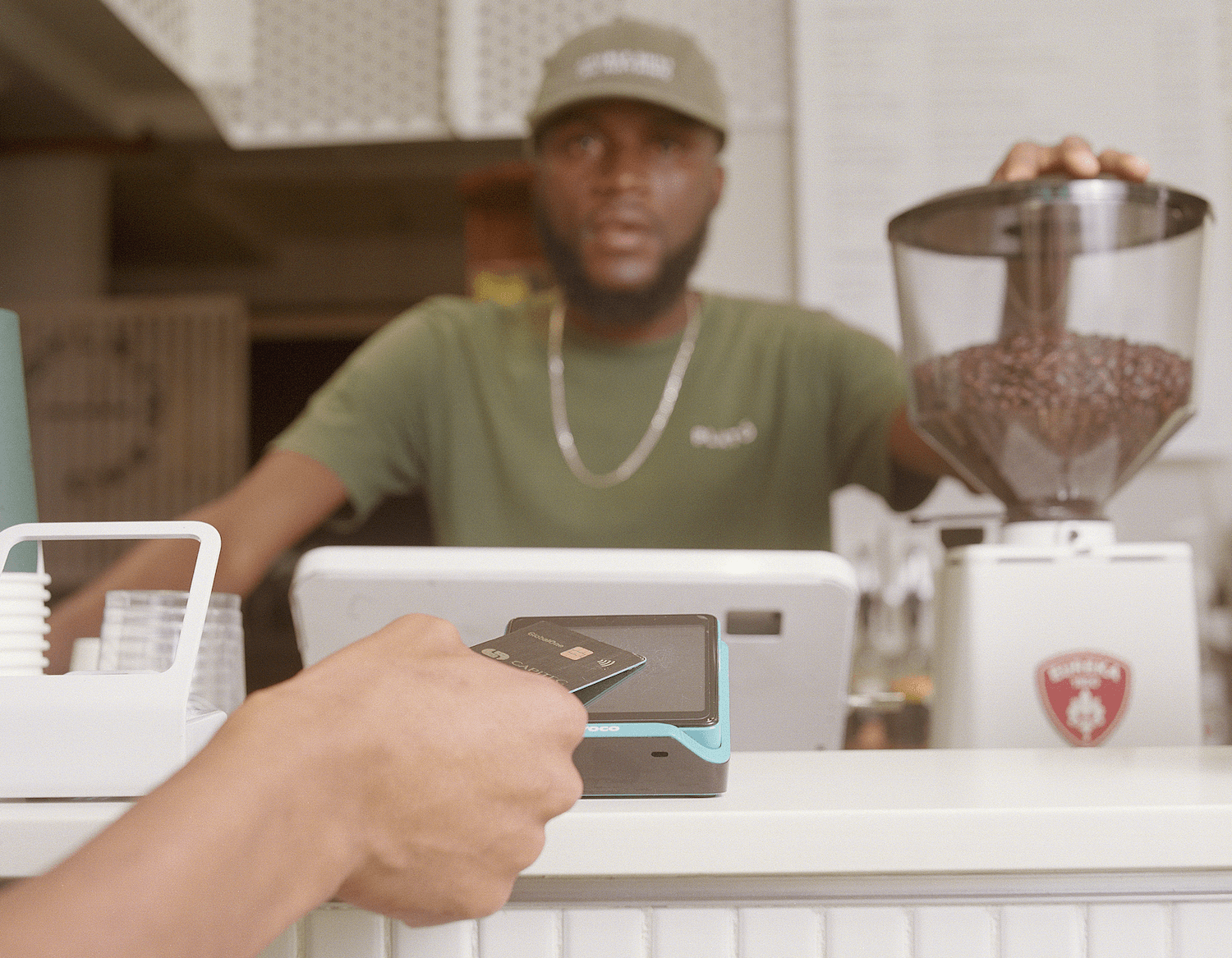
For a franchise scaling this fast, having infrastructure that keeps the whole network running as one (without adding to the operational load at head office) is what makes the next phase of growth possible. As Stephan and Petrus turn their focus from growing wide to growing deep, the tools underneath the business have to grow with them.
This isn’t just one story. Across South Africa, thousands of independent businesses are building livelihoods in ways that look a lot like the Platō: serving their communities, growing against the odds, and led by entrepreneurs thinking beyond just today.
In our accompanying data analysis, we zoom out to see the bigger picture, using Yoco transaction data to explore the broader patterns behind how independent businesses are growing today.
Because beyond the numbers, it’s stories like Stephan’s that show what growth really means.
Let’s grow.
Need help finding the right product?
Let us help you choose the best fit for your business.