Beyond Growth - Volume 5: How Divya Vasant and Lisa Mgcotyelwa grew AMAZI SHEtribe
How Divya Vasant and Lisa Mgcotyelwa built AMAZI SHEtribe, a beauty business that proves profit and purpose can coexist.
Yoco Editor

Divya Vasant and Lisa Mgcotyelwa built AMAZI SHEtribe to solve a problem the beauty industry failed to address: qualified professionals couldn't get their first break. So instead of waiting for the industry to change, they provided the springboard so many were waiting for. They created their own beauty bars, put their graduates behind the chairs, and built a business the system didn't even have a category for: One that's part commercial venture, part not-for-profit, and entirely committed to proving that profit and purpose don't have to be in conflict.
A decade in, not only can AMAZI nail and beauty bars be found inside select Woolworths stores, but they have also developed their own natural skincare line, and continue to run the skills academy where it all began; processing sales through Yoco across their commercial arm. Around 3 000 women have come through their programme, and close to a third of all employed nail technicians in the country got their start through AMAZI.
We met up with Divya and Lisa as they shared their entrepreneurial journey. One with people at its core and where profit naturally followed.
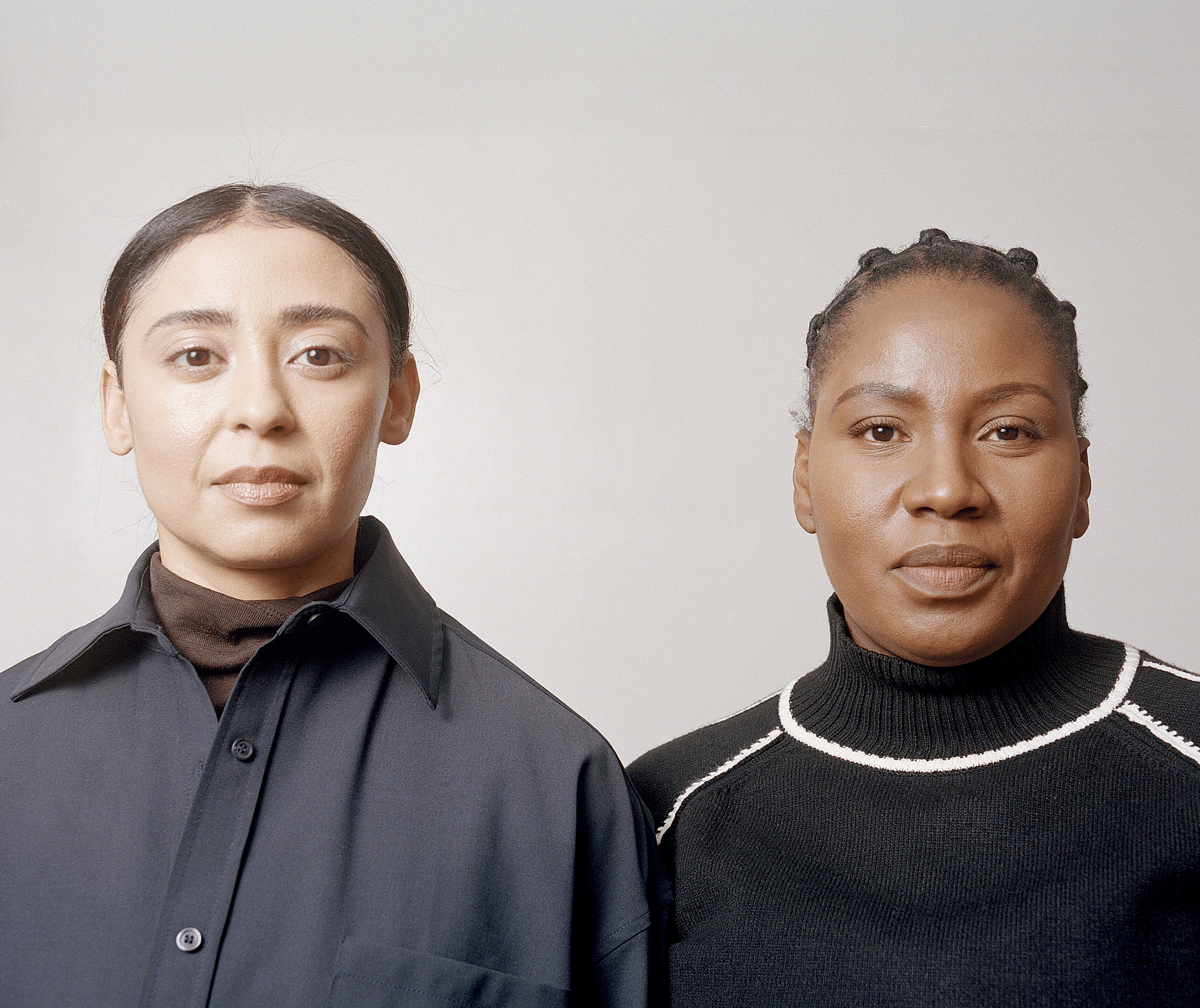
When economist Divya Vasant and beauty professional Sekela Lisa Mgcotyelwa met, they discovered a powerful overlap between their respective industries which, paired with their shared passion for women’s upliftment, led them to co-found AMAZI SHEtribe. AMAZI is a social impact brand teaching beauty skills as a route to financial empowerment for women. The multi-faceted business includes a natural skincare line, a fleet of nail and beauty bars located in select Woolworths beauty departments, and a skills-training academy, which is where it all began.
AMAZI started as a not-for-profit organisation training previously unemployed women to enter the job market. “We both always knew that we wanted to create a model where we were giving women that our economy has forgotten the opportunity to be skilled with something marketable and credible,” Divya says. “But we didn't want to just give someone a skill and then cross our fingers, hope and pray that they land in the industry because we know that in the beauty industry experience is preferred.” Their idea at the time was to predominantly function as a skills developer partnering with the biggest salon brands in the country to place their graduates in real jobs. “We followed all the steps, and when a woman was sent over for assessments, she’d pass them all but there was just so little uptake,” Divya says. When it came down to it, other brands just weren’t as committed to giving qualified but inexperienced practitioners their first shot. So Divya and Lisa started a business servicing paying customers, where their talent could cut their teeth. “We weren't going to sit and accept the industry's excuses,” Divya says.
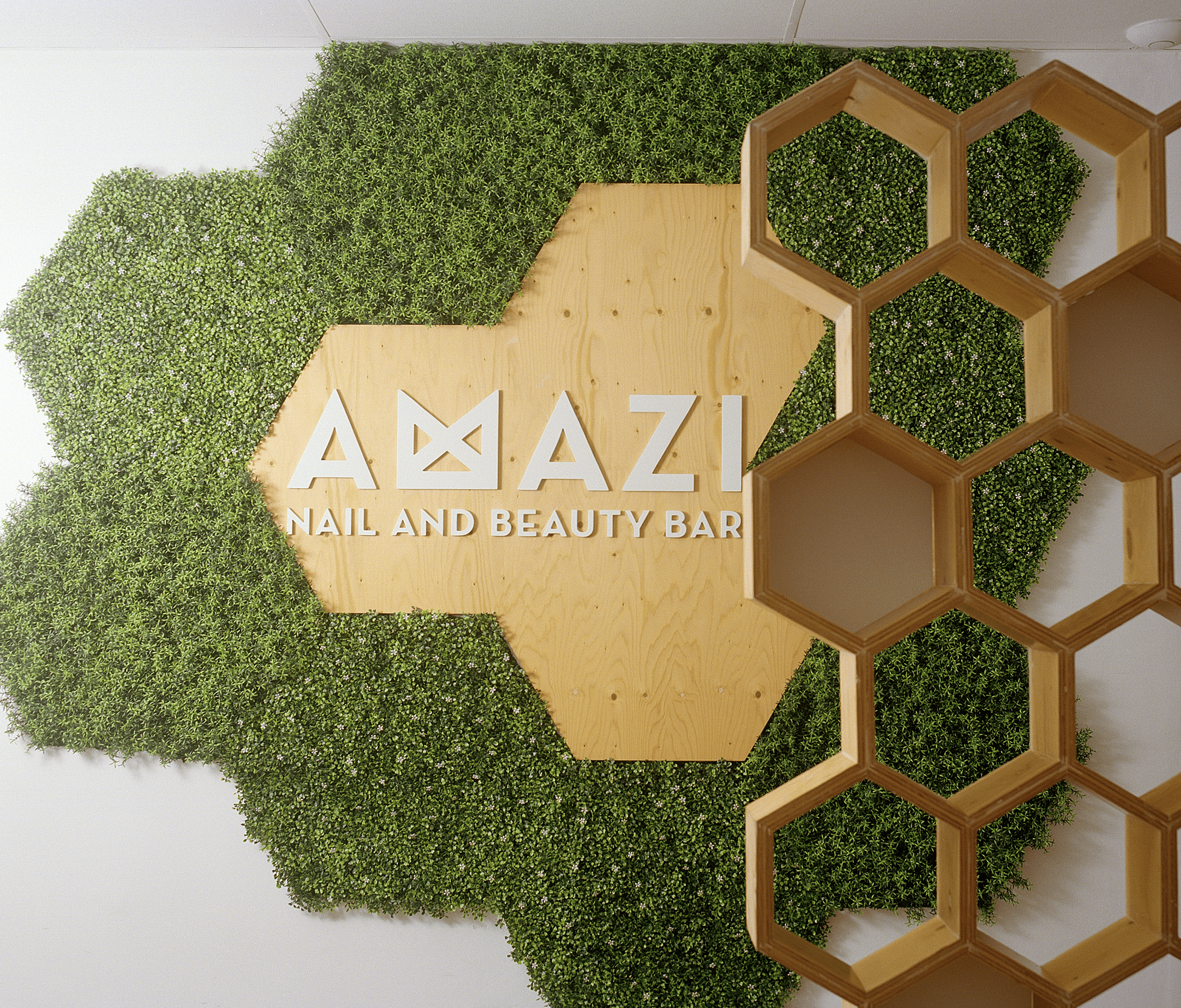
What’s now called a hybrid structure was rare when Lisa and Divya started out. Even when registering the business, there was no category for a company that’s part commercial venture and part non-profit, no legal label for a business founded for social good. The process of establishing AMAZI has been an act of pioneering. “The way that the company is structured goes down to what we believe in,” Lisa says. “If [a candidate] doesn't have access to pay for a beauty course, we've made that available through the skilling component, which is the non-profit, but ultimately she needs to be able to sustain herself and her life through an income, and that happens in business. If you stick to a nonprofit mindset, you don't push the ambition or the rigor that is needed for her to actually see herself as more than someone who received a free course. It’s very important to us that she can build that grit through our commercial arm.”
AMAZI graduates have different pathways to choose from. Whoever meets the criteria goes through a selection process of rigorous assessments to transition to their beauty bars, and the women who are more entrepreneurial receive training and support for starting their own business. “We give them the tricks and the tools to start off, but they are also welcome to cycle back in for a refresher, or if they need to understand something like numbers or marketing,” Lisa explains. If a graduate isn’t ready to head into the greater work place, AMAZI might keep her longer or incorporate her skills or interests into other areas of the business. Graduates may also be directly employed within the industry, where AMAZI has become well-known for its training programme. Of all these avenues, AMAZI is investing most heavily in championing women to start their own businesses—for a variety of reasons. “One, at the scale that we want to affect change, there aren't enough formal jobs,” Divya says. “And two, we believe that with the amount of work and support that we do with women to be able to build the mental fortitude to back themselves, that we should be able to help them do exactly that.” Being your own boss with a command of your own time is an incredible opportunity for the overwhelming percentage of single mothers who go through the AMAZI programme. And those who give entrepreneurship a go but find it too daunting are always welcomed back where they can be placed in a job at one of AMAZI’s beauty bars.
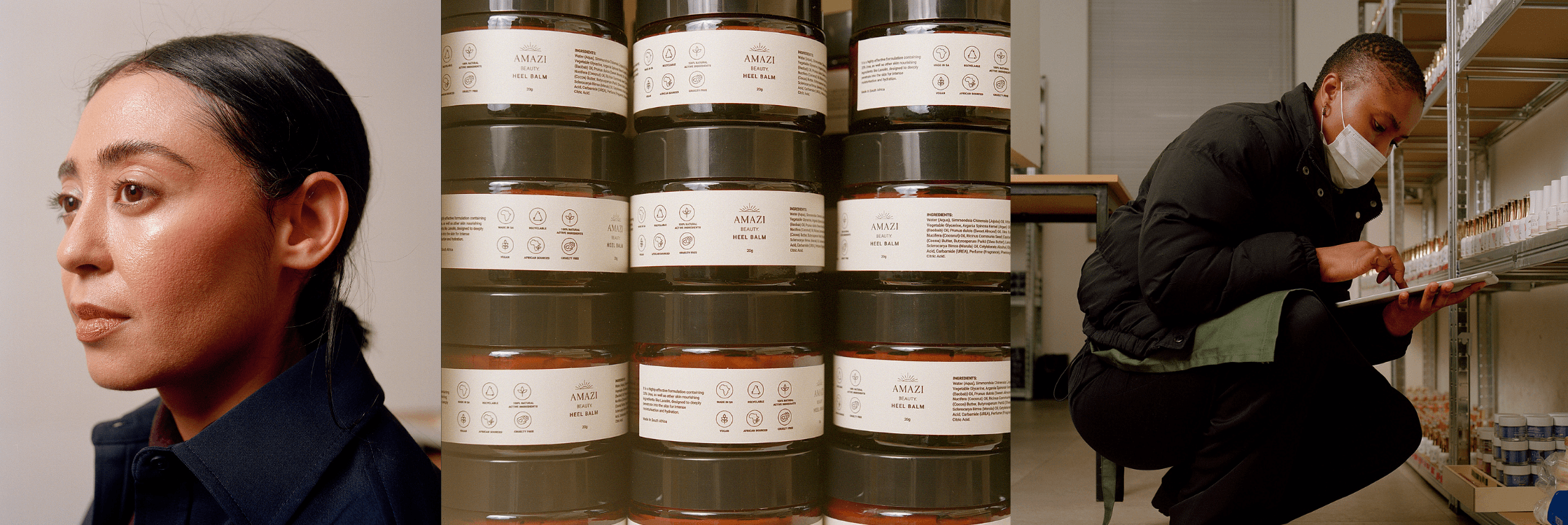
AMAZI’s first iteration of beauty bars were store spaces rented in shopping malls. At the time they didn’t realise they’d be getting a free course in resilience along with the square meterage. Their very first salon at Maynard Mall in Wynberg, Cape Town shared a back wall with a fried chicken shop and came with daily challenges like pest control and getting the space to smell more like essential oils than hot oil. “I don't know how, but somehow we made that store profitable!” Divya says. They opened two more stores in Cape Town, and another three in Johannesburg. This was pre-2020, and when the global pandemic brought lockdowns and social distancing requirements by law, the beauty industry was one of the hardest hit. “When we did reopen, the unit economics around brick and mortar just didn't make sense anymore,” Divya says. They decided to close their stores.
While workshopping strategy together back in 2017, Lisa recalls how they discussed a ‘store within a store’ model, where they envisioned AMAZI beauty bars within bigger establishments, where overheads would be covered, and foot traffic was well-heeled. She remembers that under stretch goals, they wrote down the name of high-end national retailer ‘Woolworths’. Fast-forward to the pandemic years, and one of the ways they pivoted was to develop a product range; a way to retail without relying on in-person treatments. They debuted this line with a small launch at their Cape Town training space, and shared their story and vision with the 40 people in the room. What they didn’t know was that one of their guests had brought along the head of beauty for Woolworths, and the next day they received an email from her asking them to pitch AMAZI to partner in rolling out beauty services within their stores. Woolworths was looking for a brand partner already making an impact, and who could scale. Three months after their pitch, AMAZI were up and running in the beauty department at the V&A Waterfront. Every time they tell the story, Divya says they’re met with amazement: “People always assume that we were the ones who were aggressively hunting down doors, but they came knocking on our door.” Lisa jokes: “I think the universe looks at the two of us and goes, "Ah, shame, they try so hard. Here, let me give them something!”

Every woman who goes through AMAZI’s doors not only leaves with technical skills, but with soft skills to prepare her for the workplace, and an emotional toolbox to sustain her throughout her career. “We all have a story and sometimes that story is our crutch to not achieve what we need to achieve,” Lisa says. “So our belief is that anyone who wants to build a lengthy, fruitful career needs to do self-work, no matter your education level or the social class that you are in.” The Thriving Woman is a 10-chapter self-paced journal developed by AMAZI to help trainees understand the power of a positive mindset. “Doing a course and getting a job is one part of it, but staying power is another thing,” Lisa says. “What happens when things go wrong? You need to have a resilient mindset to push through.” The majority of trainees come from difficult circumstances, and even if they become excellent nail techs, they might also need to learn the confidence to make eye contact or speak to a client. “It takes a lot of work in the background,” Lisa says. “And that's the main difference between an AMAZI graduate and a graduate trained elsewhere. They have staying power.”
As a social impact brand, there’s a balance that Divya and Lisa are always calibrating. Focussing intently and holistically on upliftment can’t come at the detriment of business growth, and profit can’t come at the cost of their purpose. “When you are only focused on maximizing profit, you will do it at all costs, even the cost of the humans that drive your business,” Divya says. Whereas the vision for AMAZI is about restoring humanity to business and pioneering a model where everybody succeeds together. “It sounds really nice when you say it. It sounds so self-actualized and woke. But honestly, it's really, really difficult to actually bring something like this to life in a world that values a capitalist framework,” Divya says. “In our commercial arm, we have to make sure that somehow we're competitive relative to other players in the industry that have abhorrent labour practices and unethical ways of doing business, or with people who are taking the shortcuts. And that's really hard.”

Someone recently asked Divya and Lisa why they’re doing things ‘the hard way’. But Lisa counters: “What happens to the women who are really vulnerable and will never get an opportunity elsewhere?” Approximately 3000 women have graduated through AMAZI in the decade that they’ve been skilling. “There still is no impact brand in the industry except us,” Divya says. “About just under a third of employed nail techs across the country are birthed from us. We've brought that new labor into the market that no one would've ever given a shot to.”
Early on, when Divya and Lisa hit their first real hurdle, they looked around to see if there were other women of colour entrepreneurs they could look to to find out how to navigate the hard stuff. Coming up short, they wondered why nobody was talking about the real difficulties they were facing. That’s when they realized the importance of being open about their challenges, in the hope that they can offer something meaningful to peers who may be one or two steps behind on their journey. “When you speak openly, you give affirmation that this is not going to end you, this is not going to stop your business or end your aspiration,” Divya says. “And then you can also give practical, helpful tools, right? Like this is the legal counsel we sought. This is how much it cost us. That kind of stuff is so important for the ecosystem of entrepreneurs.”

“I think the curated version of entrepreneurs, especially young ones, puts a lot of performance pressure on them,” Lisa adds, “because once you put yourself out there as this mogul on Instagram and the reality of business hits, your mental health can really be impacted and some don't make it out of it. So it's been important for us to tell an authentic story that just illustrates the truth of a good day in business, a bad day in business and something in between.”
AMAZI has stayed close with the women they’ve worked with over the years. They’ve seen women go on to buy houses and cars. They’ve seen their children go through school and get into university. “Generational impact is the dream,” Divya says. “There's data across the world since the beginning of time to show that when a woman earns, an entire household and generation thrives.” The question that’s always on Lisa’s mind is whether they are making enough noise to inspire others—espcially in government—to take their lead. “We need to create enough of a statement to have decision makers in the country take women seriously, and take this industry seriously,” she says. “We are employment creators and we've remained resilient post a pandemic. Surely the work that is being done should make the world stop and rethink how we create spaces for women to grow, to earn, to be able to sustain themselves and not be dependent on grants?” The five year goal for AMAZI SHEtribe is to enable 10 000 women to become entrepreneurs in the beauty industry. “And then when we hit that, the goal will be 50,000. When we hit that, the goal will be 100,000,” Divya says. “And hopefully by that point we'll feel like we made it.”
How AMAZI SHEtribe uses Yoco to power a business built for purpose
Divya and Lisa knew that training alone wasn’t enough. If they sent graduates out into an industry that required previous experience, they wouldn’t solve the real problem. So they created their own fleet of beauty bars where graduates could cut their teeth with real, paying customers.
“We weren’t going to sit and accept the industry’s excuses.”
— Divya Vasant, Co-Founder, AMAZI SHEtribe
From those early stores, AMAZI grew to six locations across Cape Town and Johannesburg. It was during this period, in June 2017, that they first started using Yoco to process in-store card payments. What began as a practical decision around payments became a partnership that has lasted nearly nine years.
Pivoting a business model without losing momentum
When COVID-19 hit, most businesses in their position would have retreated. Instead, AMAZI pivoted and unlocked the next phase of growth.
They developed a natural skincare product line as a way to keep retail moving without relying on in-person services. They also pursued the ‘store within a store’ model that Lisa and Divya had sketched out years earlier as a stretch goal for their business.
Soon, the name written at the top of their list of dream partners came knocking: Woolworths. A guest at a small product launch in Cape Town turned out to have brought along the head of beauty for Woolworths. The next day, AMAZI received an email asking them to pitch. Three months later, they were in the beauty department at the Woolworth’s store on the V&A Waterfront.
“People always assume that we were the ones aggressively hunting down doors, but they came knocking on our door.”
— Divya Vasant, Co-Founder, AMAZI SHEtribe
Payments that adapt to how the business works
As AMAZI’s operating model shifted, so did their partnership with Yoco. Today, they use Yoco’s online payment integration to process their product sales through their e-commerce store, and they are planning to extend that to a new online offering currently in development. Yoco handles the digital side of the business by keeping transactions simple, reliable, and easy to manage from the back end.
Access to funding has also been a persistent challenge for entrepreneurs in the AMAZI network. Beauty professionals looking to finance stock, equipment, or the early costs of setting up a business face real barriers in accessing affordable capital. Yoco Capital is part of the conversation AMAZI is having with their community as a tool that can put funding within reach for small business owners who have historically been underserved by traditional lenders.
Nearly nine years after their first Yoco transaction, the relationship has grown into something well beyond payments. In April 2026, AMAZI and Yoco co-hosted a beauty entrepreneurs event: a pilot programme designed to equip women in the AMAZI network with the business tools they need to grow and sustain their own enterprises. It is the kind of partnership that reflects two organisations who are helping entrepreneurs build real capacity, not just transactions.
“We’ve both always known that giving someone a skill isn’t enough. You have to give them the tools to build something with it.”
— Divya Vasant, Co-Founder, AMAZI SHEtribe
Enabling 10 000 women entrepreneurs
The five-year goal for AMAZI SHEtribe is to enable 10 000 women to become entrepreneurs in the beauty industry. After that, the target moves to 50 000. Then 100 000. The ambition is generational and built on evidence that when women earn entire households thrive.
Getting there means continuing to build the commercial engine that funds the social mission. The skincare product line is growing. The online store is expanding. New service offerings are in development. And the AMAZI academy continues to produce graduates who go on to start their own businesses, take jobs at the beauty bars, or feed into the broader industry where roughly a third of employed nail technicians across South Africa are now AMAZI-trained.
For a business operating as part commercial, part non-profit, part training academy, and part retailer, having payment infrastructure that is flexible, reliable, and genuinely supportive of small business growth is not a nice-to-have.
The most impactful businesses in South Africa are building something that lasts beyond immediate profits. Yoco is proud to back founders like Divya and Lisa who are doing business differently. Yoco’s online payment gateway, Capital offering, and simple back-end tools are built for businesses that are building something bigger than a single revenue stream so founders spend less time on admin and more time on the work that matters.
This isn’t just one story. Across South Africa, black-owned and women-owned independent businesses are building pathways for true transformation in ways that look a lot like AMAZI SHEtribe.
In our accompanying data analysis, we zoom out to see the bigger picture, using Yoco transaction data to explore the broader patterns behind how independent businesses are growing today.
Because beyond the numbers, it’s stories like Divya and Lisa’s that show what growth really means.
Let’s grow.


Need help finding the right product?
Let us help you choose the best fit for your business.